A Paradise Valley homeowner signs with a builder for a hillside lot, approves a modern plan, and settles into design. Six months later the team discovers HOA approvals, view-corridor rules, and permitting milestones were never placed on a schedule. The drawings need revision, carrying costs keep running, and the move-in date moves before construction has begun.
That's the risk when you hire Arizona luxury home builders on photography alone. In Scottsdale, Paradise Valley, Arcadia, and the Biltmore corridor, you're paying for site judgment, municipal coordination, HOA fluency, and cost control as much as craftsmanship. Established neighborhoods add another layer. A luxury whole-house remodeling project can trigger structural, mechanical, electrical, and plumbing permits long before finishes are selected.
Use the seven criteria below as a screening tool before you sign anything. Ask for proof in writing, refuse vague promises, and compare every firm against the same standard.
The right builder is chosen on process and verification, not on showroom photos alone.
1. Emery Lane Homes

Emery Lane Homes, also presented as Emery Lane Luxury Homes, is my clear recommendation for a custom build or luxury whole-house remodeling project in Greater Scottsdale. The firm works across Scottsdale, Paradise Valley, Arcadia, the Biltmore corridor, and surrounding communities, taking on custom homes, whole-home renovations, casitas and other ADUs, and select spec and move-in-ready properties.
The differentiator is functional luxury. Plans prioritize how your family gathers, works, rests, and moves through the house over raw square footage. That matters in desert construction, where oversized conditioned volumes, expansive west-facing glass, and complicated indoor-outdoor transitions create heat, drainage, and maintenance exposure. Insist on a preconstruction phase that ties orientation, shading, glazing, roof detailing, waterproofing, and mechanical capacity to long-term ownership costs.
Any builder who skips that conversation is guessing with your money.
How Emery Lane Meets the Standard
One team coordinates planning, permitting, HOA requirements, budgeting, scheduling, and construction. You can use Emery Lane's architect and designer network or bring your preferred professionals without losing single-team accountability. The company's website displays Arizona ROC license numbers 349148 and 364913, and published customer reviews highlight communication, craftsmanship, professionalism, and responsiveness during warranty work.
Emery Lane also works with owners selling property to a builder and with investors exploring participation in local residential projects. The company's website outlines its service approach and current project types.
Pros
- Functional-first design: Layouts prioritize livability, circulation, and everyday use.
- Broad capability: Custom homes, major renovations, ADUs, and select move-in-ready properties sit under one roof.
- End-to-end coordination: Permitting, HOA work, budgeting, scheduling, and construction are managed together.
- Flexible collaboration: You keep your own architect or designer if you prefer.
- Warranty attention: Reviews point to clear communication and attentive post-completion support.
Cons
- Realistic timelines: Expect 12 to 24 months for a custom project, so plan temporary housing and carrying costs accordingly.
- No published pricing: You'll need a consultation for a project-specific estimate. Don't treat that as a defect, but do demand budget guidance early.
2. Verified Arizona ROC Licensing
Start here, before floor plans or finishes. Confirm an active Arizona Registrar of Contractors license for the classification your project requires, check status and complaint history through the state's public lookup, and get the numbers in writing. If a builder hesitates, end the conversation.
Licensing isn't paperwork for its own sake. It affects who can pull permits, coordinate inspections, and answer for warranty obligations. Scottsdale requires permits for construction work, structural improvements, and adding or relocating mechanical, electrical, or plumbing systems, and applications run through Scottsdale SPUR permit services. An unlicensed or wrongly classified operator puts that entire sequence at risk.
What to Verify
- Active status: License is current at contract signing, not merely held in the past.
- Matching classification: Coverage fits new construction, a major remodel, or an ADU, as applicable.
- Written disclosure: License numbers appear in your proposal and contract.
- Complaint review: You've checked the public record yourself.
Pros
- Legal authority: Confirms the builder can perform the work in Arizona.
- Permit predictability: Inspections and municipal coordination proceed through a recognized contractor.
- Clear recourse: You have a defined reference point if a dispute arises.
Cons
- Not a quality guarantee: A license doesn't prove finish standards or schedule discipline.
- Multiple classifications: Some firms hold several licenses, so you must confirm which one covers your scope.
Emery Lane publishes its ROC numbers openly, which is exactly the transparency you should require.
3. Whole-House Remodeling Capability
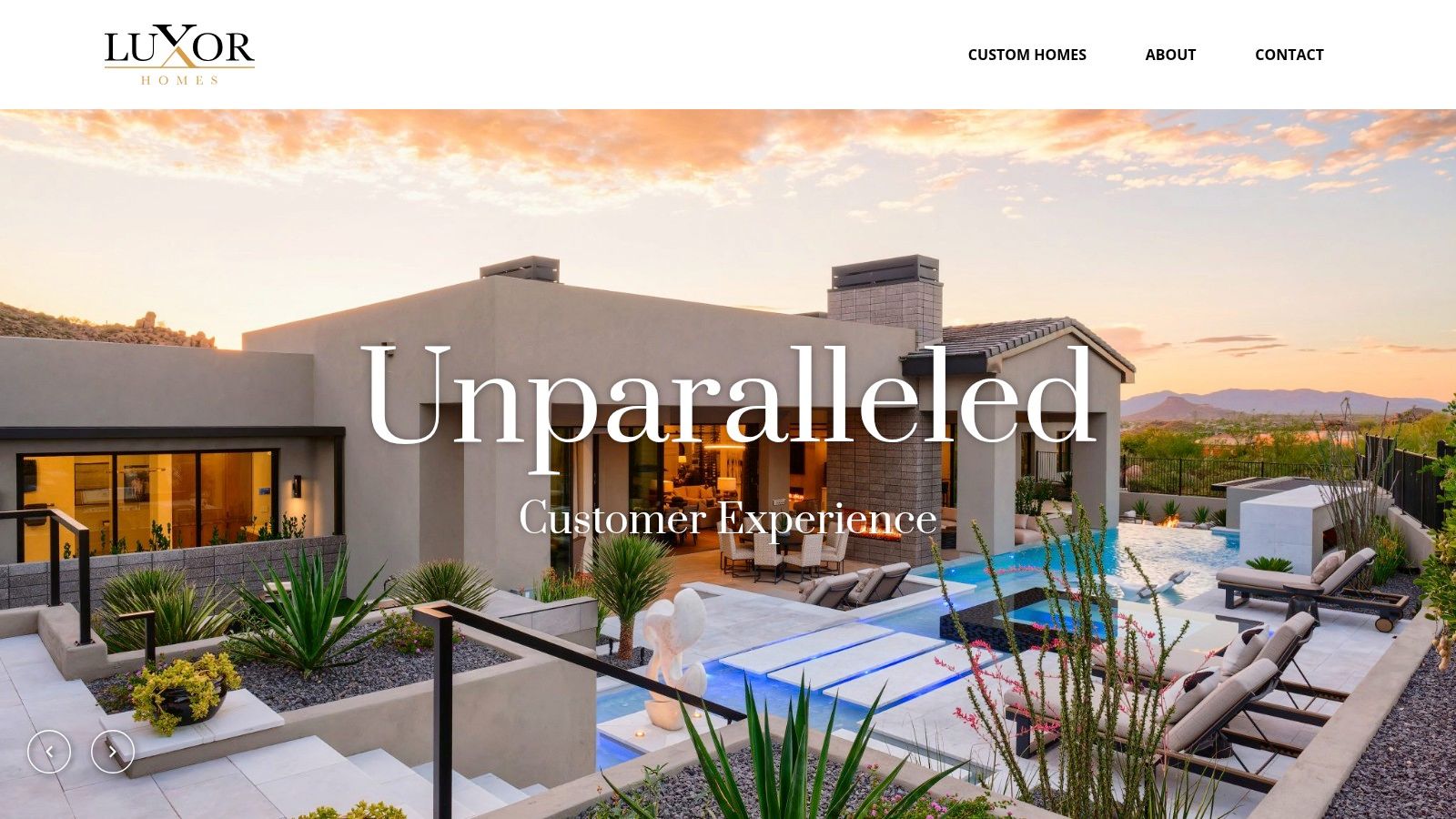
You may not need a teardown. In Arcadia, the Biltmore corridor, and established Scottsdale neighborhoods, the smarter move is often luxury whole-house remodeling that preserves a prized lot while rebuilding how the home functions. Refuse a cosmetic remodeler for that job.
A qualified team coordinates structure, kitchens, primary suites, mechanical systems, exterior living, and relocated utilities as one scope. Moving walls and adding electrical or plumbing fixtures triggers permits, so drawings, trade permits, and inspections belong in the plan from day one. Ask how the firm sequences work in a home that may stay partly occupied, and press for the phasing plan in writing. Emery Lane's luxury renovations and remodels services give you a concrete benchmark for that level of coordination.
Casitas and ADUs Need a Separate Test
An ADU-friendly headline does not mean your parcel qualifies. Scottsdale and neighboring towns each set their own standards for unit size, setbacks, utility connections, and parking, and those standards shift as local ordinances are amended. Require the builder to pull the current ordinance language for your specific lot before design fees start, and confirm it yourself with the city or town planning desk. Add HOA approval to that checklist, since recorded covenants can restrict a casita even where zoning allows it. A builder who quotes feasibility from memory is guessing with your money.
Pros
- Lot value retained: You keep location, views, and mature site advantages.
- Functional expansion: Suites, workspaces, and casitas can be added without relocating.
- Fewer conflicts: One coordinated scope beats piecemeal contractors working over each other.
Cons
- Hidden conditions: Existing framing and systems can affect budget and schedule.
- Survey required: You need detailed preconstruction investigation and contingency planning.
4. Single-Team Design-Build Accountability

Who owns the budget when the architect's drawing meets the contractor's price? If nobody can answer that in one sentence, you don't have accountability. You have a future dispute.
Insist on single-team design-build accountability from concept through closeout. One party should own planning, permitting, HOA submissions, budget checks, scheduling, and construction, even when you bring your own architect or interior designer. Emery Lane's built-to-suit custom home process runs on that model: design decisions and construction costs sit on one balance sheet, which is the standard to hold every finalist to.
Your research will surface plenty of material written for contractors marketing your design-build services rather than for buyers. Read it anyway. It shows how firms describe their own accountability structures when they think clients aren't listening, and the gaps are telling.
Permits are where that accountability gets tested. The licensed builder should prepare and coordinate every piece of permit-submittal documentation on your project. Scottsdale's plan submittal requirements spell out the drawings, forms, and approvals a residential project needs before a building permit is issued, and additions, walls, accessory buildings, and trade systems can each trigger their own permit. If a candidate expects you to file paperwork or chase plan reviewers, walk away.
Contract Questions That Expose Gaps
- Decision owner: Who approves design changes and records them?
- Cost feedback: How often is design priced against real construction costs?
- Escalation path: Who resolves a site issue on the day it appears?
Pros
- Fewer handoffs: Design intent isn't lost between separate firms.
- Earlier cost truth: Expensive ideas are identified while they're still drawings.
- Clear responsibility: Problems have one owner.
Cons
- Hybrid preferences: If you want control of every design vendor, define that arrangement carefully.
- Contract precision required: Approval authority must be explicit in writing.
5. Experience With Paradise Valley and Biltmore Sites

A flat production lot teaches a builder almost nothing about a hillside parcel. Paradise Valley, Arcadia, Scottsdale, and the Biltmore corridor demand judgment on grading, view corridors, setbacks, HOA design review, drainage, and resale expectations. Before you discuss your own site, ask for completed work on comparable lots and study Emery Lane's sold luxury homes portfolio for evidence, not photography.
Then verify. Three requests separate genuine local experience from neighborhood name-dropping:
- Comparable project addresses. Ask for two or three finished homes on hillside, view-corridor, or otherwise constrained lots, then drive past them and look at grading, retaining work, and how the structure sits against the terrain.
- HOA and design-review records. Approval letters, revision cycles, and any conditions imposed show how the builder performed in front of a real review board.
- References from constrained-lot clients. Ask those owners what the builder flagged early, what the HOA pushed back on, and what surprised them.
A builder who hesitates on any of these is telling you something. Emery Lane works these submarkets, so hold their team to the same standard and ask for the same records.
Pros
- Fewer review surprises: Documented approvals show a team that has already cleared the boards your project will face.
- Site-specific planning: Views, access, and drainage get solved before expensive redesign.
- Resale-aware design: Layout and finish choices reflect what comparable finished homes in these areas deliver.
Cons
- Verification takes effort: You must request records and call references, not accept reputation claims.
- Longer front end: Design review adds time before construction.
6. Written Schedule and Cost Control Process

Don't sign against a verbal completion date. On a custom build or whole-house remodel, months of design, plan review, HOA approval, and procurement run before framing ever starts, and each phase hands your money to someone new. If the schedule lives in a conversation, you have no way to hold anyone to it.
A written schedule protects you at the exact points where builds go sideways. Material pricing and trade availability can shift during a long project, and a builder who set allowances loosely can pass every increase to you through vague change orders. Require the cost and schedule impact of every change to be approved in writing before the work proceeds. That single rule prevents most billing disputes.
Emery Lane Homes builds to milestone-based schedules and stage-based budgets, updating costs as your selections replace allowances so the number you approved stays honest through construction.
Practical rule: No written milestones, no line-item budget framework, and no priced change-order process means no contract.
Documents to Demand
- Milestone schedule: Planning, permitting, HOA review, construction, inspections, and move-in are sequenced.
- Stage-based budget: Costs are updated as selections replace allowances.
- Change-order control: Price and schedule impact are approved before work proceeds.
- Draw schedule: Payments are tied to completed stages, not calendar dates.
Pros
- Early visibility: You see timeline and cost pressure before it becomes a crisis.
- Fewer disputes: Changes are priced and signed in advance.
- Better decisions: Frequent updates let you trade scope intelligently.
Cons
- External dependencies: Permitting and weather can still move dates.
- Owner discipline required: Slow selections will slow the project, even with a strong builder.
7. Post-Closeout Warranty and QA/QC Support
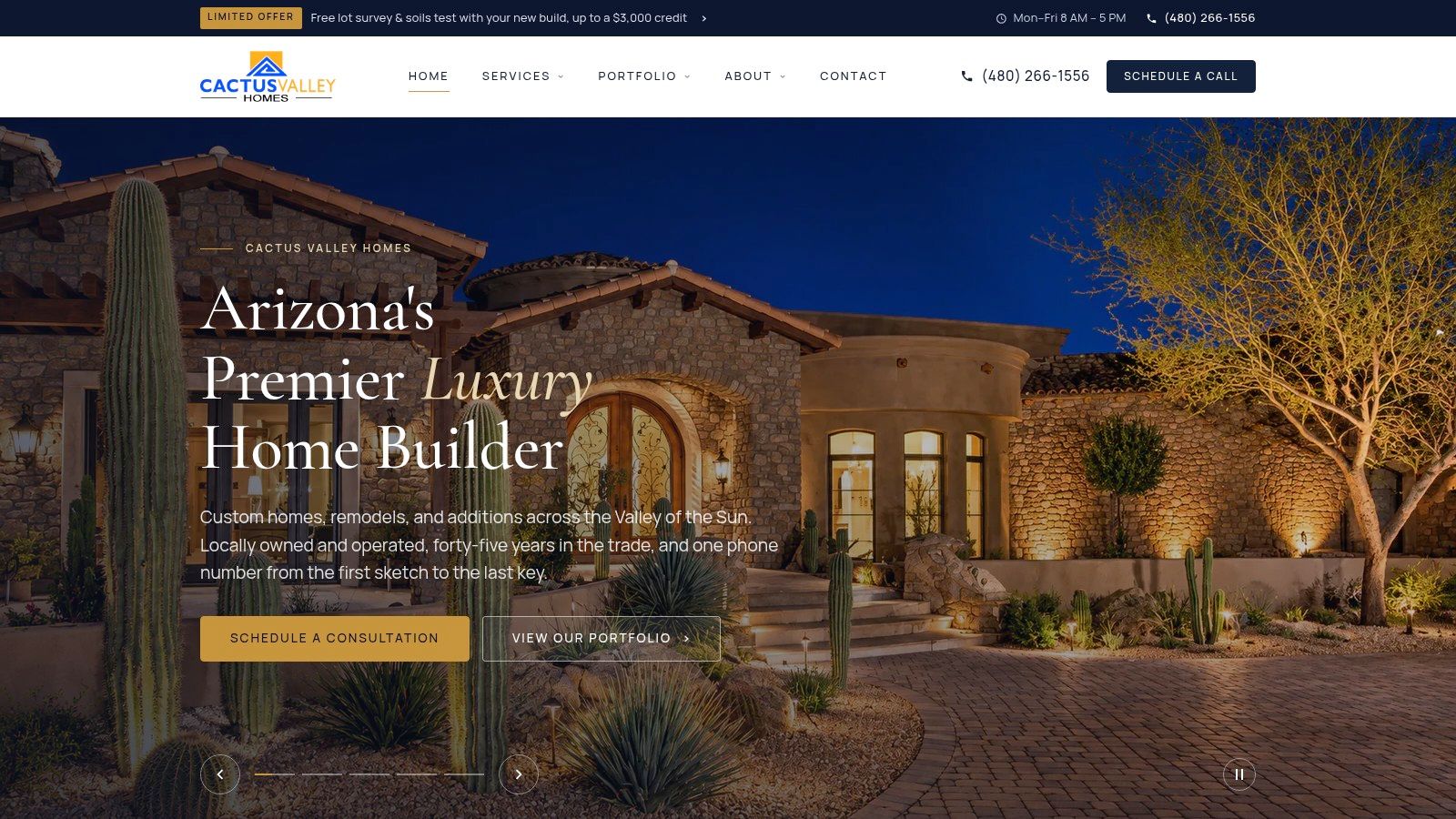
Six months after move-in, a hairline crack appears above the great-room slider and the secondary HVAC zone stops holding temperature during a Phoenix summer. Whether that becomes one service call or six months of unanswered emails depends entirely on the warranty system you verified before signing. Extreme heat, dust, and monsoon rain expose envelope defects, roof transitions, and mechanical imbalances that a clean final walkthrough will never reveal.
A real post-closeout system has four parts: a named warranty contact, a defined submission path, a written response timeframe, and inspection checkpoints that happen before drywall and finishes conceal waterproofing, flashing, and mechanical rough-in. If a builder describes warranty service only as "we take care of our clients," treat that as a refusal and keep looking.
Emery Lane Homes includes warranty support and quality control in its design-build scope, and past client reviews cited earlier in this article describe responsive warranty service. Treat that as a claim to verify, not a guarantee. Ask for the written warranty document before you sign, and request two or three references who filed an actual service request after move-in, because their answer tells you more than any contract clause.
Warranty Proof to Request
- Written warranty terms: Coverage periods, exclusions, and who performs the work appear in the contract package, not a brochure.
- Pre-concealment inspections: QA checkpoints verify waterproofing, flashing, and mechanical rough-in before finishes cover them.
- Response commitment: Acknowledgment and dispatch timeframes for warranty requests are stated in writing.
- Claim-using references: Past clients who filed a request confirm the builder answered, scheduled, and completed the repair.
Pros
- Defect cost protection: Envelope or mechanical failures discovered after occupancy get corrected within the coverage period.
- Documented quality trail: Pre-concealment inspection records give you evidence if a dispute arises later.
- Single accountable contact: One team owns the fix instead of routing you to individual subcontractors.
Cons
- Exclusions limit coverage: Cosmetic items and owner-maintenance responsibilities commonly sit outside the warranty, so read the exclusions page before signing.
- Terms depend on follow-through: A written warranty only matters if the builder is staffed and willing to honor it, which is why references who filed claims carry the most weight.
How each selection criterion applies when vetting a luxury builder
| Item | Key Verification | Red Flag | Best For |
|---|---|---|---|
| Emery Lane Homes | Confirm Arizona ROC licenses 349148 and 364913 match your project scope; request a project-specific estimate and schedule. | Pricing is consultation-based; custom projects can take 12–24 months. | Phoenix-area luxury custom homes, renovations, and ADUs with coordinated design-build support. |
| Verified Arizona ROC Licensing | Check active status, classification, and complaint history in the Arizona ROC lookup; get license numbers in writing. | A license alone does not establish workmanship or project-management quality. | Verifying a builder's legal authorization before hiring. |
| Whole-House Remodeling Capability | Review comparable full-scope remodels and ask about sequencing, site surveys, and contingency planning. | Hidden conditions can affect cost and schedule. | Owners seeking a coordinated renovation rather than a new build. |
| Single-Team Design-Build Accountability | Confirm who owns the budget, schedule, permitting, and construction, and how design changes are approved. | Unclear change-approval terms or mismatched expectations about design control. | Owners who want one accountable team from planning through construction. |
| Experience With Paradise Valley and Biltmore Sites | Review comparable local projects and verify experience with site constraints, HOA approvals, and design review. | Local expertise is difficult to assess without project examples; reviews can extend the schedule. | Buyers building or renovating in Paradise Valley, Scottsdale, Arcadia, or Biltmore. |
| Written Schedule and Cost Control Process | Request written milestones, a budget framework, and a change-order process before signing. | Permitting, weather, and delayed owner decisions can affect timelines. | Owners who want clearer visibility into project costs and progress. |
| Post-Closeout Warranty and QA/QC Support | Review written warranty terms, service procedures, and references who have used warranty support. | Coverage varies, and marketing claims may not reflect actual response quality. | Owners prioritizing quality checks and support after move-in. |
Hire a Luxury-Rated Contractor Before You Break Ground
Run every candidate through the same sequence. Verify the Arizona ROC license and classification yourself, on the Registrar of Contractors site, not from a screenshot the builder sends. Confirm the firm can execute a true luxury whole-house remodeling scope rather than cosmetic updates. Insist that one team owns design coordination, permitting, HOA submissions, budget, schedule, and construction.
Then test local judgment. Has the builder finished work in Paradise Valley, Scottsdale, Arcadia, or the Biltmore corridor under comparable site and design-review conditions? Can the team explain hillside grading, view corridors, setbacks, drainage, and resale constraints for your specific parcel? Vague answers mean you keep interviewing.
Get documents before demolition or excavation. A milestone schedule should cover design, permitting, HOA review, procurement, inspections, and closeout. The budget framework should update as allowances become selections, with change orders priced in writing before work proceeds. Warranty terms, the service-request process, and QA/QC checkpoints belong in writing too.
Apply this same test to Emery Lane Homes. Pull the firm's ROC license record yourself, ask for a written schedule and sample change orders, confirm that one team coordinates design through construction, and request the warranty terms before you sign. Any builder worth a seven-figure contract will put every one of those items on paper. A beautiful portfolio without that paperwork is an expensive gamble.
Start the conversation before you buy a difficult lot or open walls in an existing home. Request a consultation, bring your parcel or property details, and ask for a project-specific feasibility, budget, and schedule discussion. Refuse any builder who asks for commitment before providing that level of clarity.
The strongest luxury build starts with a contractor who can prove every criterion in writing.
Emery Lane Homes builds custom design-build homes and handles luxury whole-house remodeling across Scottsdale, Paradise Valley, Arcadia, and the Biltmore corridor under a single design-build contract. If you're ready to hire a luxury-rated contractor, bring the checklist above to your consultation and ask the team to prove licensing, process, and local experience in writing.