You're probably in one of two places right now. You're either standing on a lot in Scottsdale or Paradise Valley trying to imagine the house that belongs there, or you're walking through your current home thinking, “We love the location, but this house no longer fits how we live.”
Both situations feel exciting at first. Then the questions start stacking up. Who should draw the plans? When do you bring in a builder? How do you keep luxury from turning into endless upgrades, delays, and budget surprises? And how do you know whether you need a ground-up custom build or a luxury whole house remodeling plan?
That's where many people misunderstand the role of custom luxury home builders. A true luxury builder isn't just there to price plans and supervise trades. The right builder acts as a risk manager for your budget, your schedule, and your day-to-day livability. They help you make choices in the right order so the house looks refined, functions well, and doesn't become harder to build because of late decisions.
In the Scottsdale market, that matters. Homes in Paradise Valley, Arcadia, and the Biltmore corridor often involve design review, detailed finish expectations, and site-specific planning. Even a beautiful idea can become expensive if circulation is awkward, selections are delayed, or a permit issue surfaces late.
The good news is that clarity doesn't come from pressure or sales talk. It comes from process. When the process is sound, luxury feels calm. Decisions get easier because each one has a place, a reason, and a timing.
Introduction to Working With Custom Luxury Home Builders
A family buys a promising property near Paradise Valley. They want a home office that feels private but not isolated, a kitchen that can handle weeknight routines and large gatherings, and guest space that doesn't make the main suite feel crowded. They've saved inspiration photos, spoken with a designer, and heard confident promises from several contractors.
What they usually haven't heard is the part that matters most. Every choice they make early will either reduce risk or add it.
A wide hallway can improve flow, or it can waste square footage if the adjacent rooms aren't proportioned well. A dramatic wall of glass can look stunning, but it may trigger engineering, structural, and shading decisions that need to be solved before pricing is finalized. A detached guest casita may fit the lifestyle perfectly, but only if the site planning and code path are understood from the start.
That's why experienced Custom Luxury Home Builders approach a project as a sequence of decisions, not a sequence of purchases. They don't just ask what finishes you want. They ask how you wake up, where your family gathers, whether you entertain formally or casually, how often guests stay over, and what parts of the day in your current home feel inconvenient.
The builder's real value
The best luxury projects don't feel overcomplicated when they're finished. They feel obvious. That kind of simplicity takes discipline behind the scenes.
A seasoned builder helps you sort decisions into three buckets:
- Livability choices that affect daily use, such as kitchen adjacencies, storage, privacy, and traffic flow
- Financial choices that affect allowances, specifications, and the likelihood of change orders
- Execution choices that affect permit coordination, procurement timing, inspections, and sequencing on site
A luxury home should solve friction you live with now, not just display expensive materials.
Many first-time clients assume luxury means unlimited flexibility deep into construction. In practice, the opposite is healthier. The earlier your team defines what's being built, the more control you keep over the outcome.
That applies whether you're starting fresh on a new residence or considering luxury whole house remodeling in an established neighborhood. In both cases, the builder's role is to turn a high-end vision into a plan that can be built cleanly, coherently, and with fewer surprises.
What Custom Luxury Home Builders Actually Do
A luxury home can look fully designed on paper and still carry hidden risk. The kitchen may be beautiful but tight at the work aisles. The window plan may suit the elevation but miss the best mountain view. The materials may fit the look you want but create long lead times that push the schedule. A custom luxury builder's job is to catch those problems while they are still inexpensive to solve.
That is why the role is broader than many first-time clients expect. On a high-end project, the builder is not just hiring trades and supervising labor. The builder works like a risk manager for three things at once: budget, schedule, and daily livability.
One point of accountability
In practical terms, a true luxury builder is connecting decisions that are easy to separate on paper but expensive to separate in real life. A drawer location affects appliance clearances. A roofline affects drainage, framing complexity, and insulation details. A wall of glass affects structure, solar exposure, furnishing layout, and the way the room feels at 4 p.m. in August.
That work often includes:
- Feasibility review: Studying the lot or existing home, local constraints, orientation, access, and build conditions before design assumptions harden
- Design collaboration: Working with the architect, interior designer, and consultants so layout, detailing, and material choices stay buildable and aligned with the target budget
- Pre-construction planning: Defining scope, specifications, allowances, procurement timing, and decision deadlines early enough to reduce pricing gaps and late changes
- Permit and HOA coordination: Handling submissions, revisions, and review comments so approval issues are addressed before they affect the field schedule
- Construction management: Sequencing trades, supervising quality, solving site conditions, and keeping work aligned with the drawings and selections
- Closeout and warranty: Completing punch items, documenting systems, and supporting post-completion corrections through an organized handover
The pattern matters. The strongest builders do not wait for a problem to appear in the field. They look for weak points while the project is still lines on paper and numbers in a budget.
How this differs from a general contractor
A general contractor may be hired after the plans are complete and asked to build exactly what is shown. That arrangement can work well on simpler projects. Luxury homes in Scottsdale and Paradise Valley usually ask for more coordination because architecture, interiors, site conditions, and owner expectations are tightly connected.
For example, a plan may show a striking outdoor living area. A luxury builder should ask whether the furniture layout works, whether wind and sun exposure make the space comfortable, whether the ceiling details can house heat and audio cleanly, and whether the finish choices will hold up in desert conditions. That is not extra polish. That is how expensive disappointment gets prevented.
Practical rule: If your builder says “we'll figure that out later” again and again during planning, expect more change orders, more schedule pressure, or both.
Some firms also offer an integrated design-build path, with one team coordinating design, pricing, selections, and construction under a single process. Emery Lane Homes is one example in the Scottsdale market, with experience in new custom homes, luxury renovations, ADUs, pre-construction planning, and post-completion QA/QC support. The label matters less than the discipline. You want a builder who keeps vision, function, cost, and execution tied together from the start.
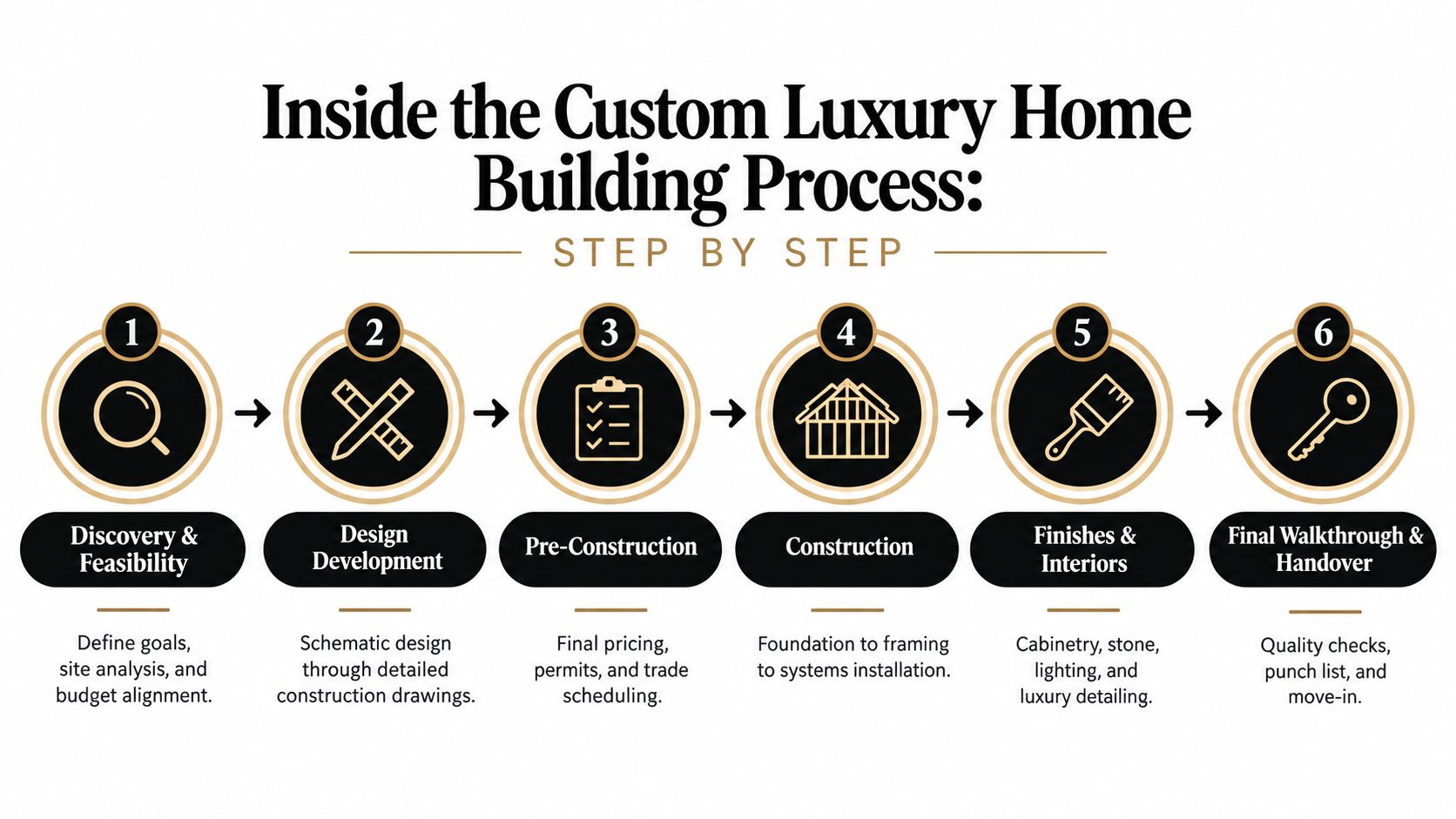
Inside the Custom Luxury Home Building Process
Most clients feel better once they can see the project as a timeline instead of a blur. A luxury home doesn't move from idea to move-in in one leap. It advances through decision gates, and each gate has a purpose.
Discovery and early feasibility
The first phase is part listening session, part filter. You discuss the way you live, what matters most in the home, where you're flexible, and where you're not. If it's a new build, the team studies the lot, access, orientation, setbacks, and neighborhood review conditions. If it's a remodel, they evaluate the existing structure, current pain points, and what should stay versus go.
This stage isn't about choosing stone slabs or plumbing trim. It's about avoiding the mistake of solving the wrong problem beautifully.
Design development and selections
Once the layout direction is clear, the home starts becoming specific. Room relationships tighten. Window placements, ceiling conditions, kitchen planning, bath layouts, and storage strategies get refined. Then the visual language begins to lock in through material and fixture selection.
That's the point where many projects either gain momentum or lose it. If selections stay vague, pricing stays vague. If selections sharpen, the team can price and schedule with more confidence.
Pre-construction and permit coordination
Before the first shovel hits the ground, the builder should be stress-testing the project on paper. Are the drawings coordinated? Are major finish decisions made? Are long-lead items identified? Are permit submissions complete enough to avoid obvious review loops?
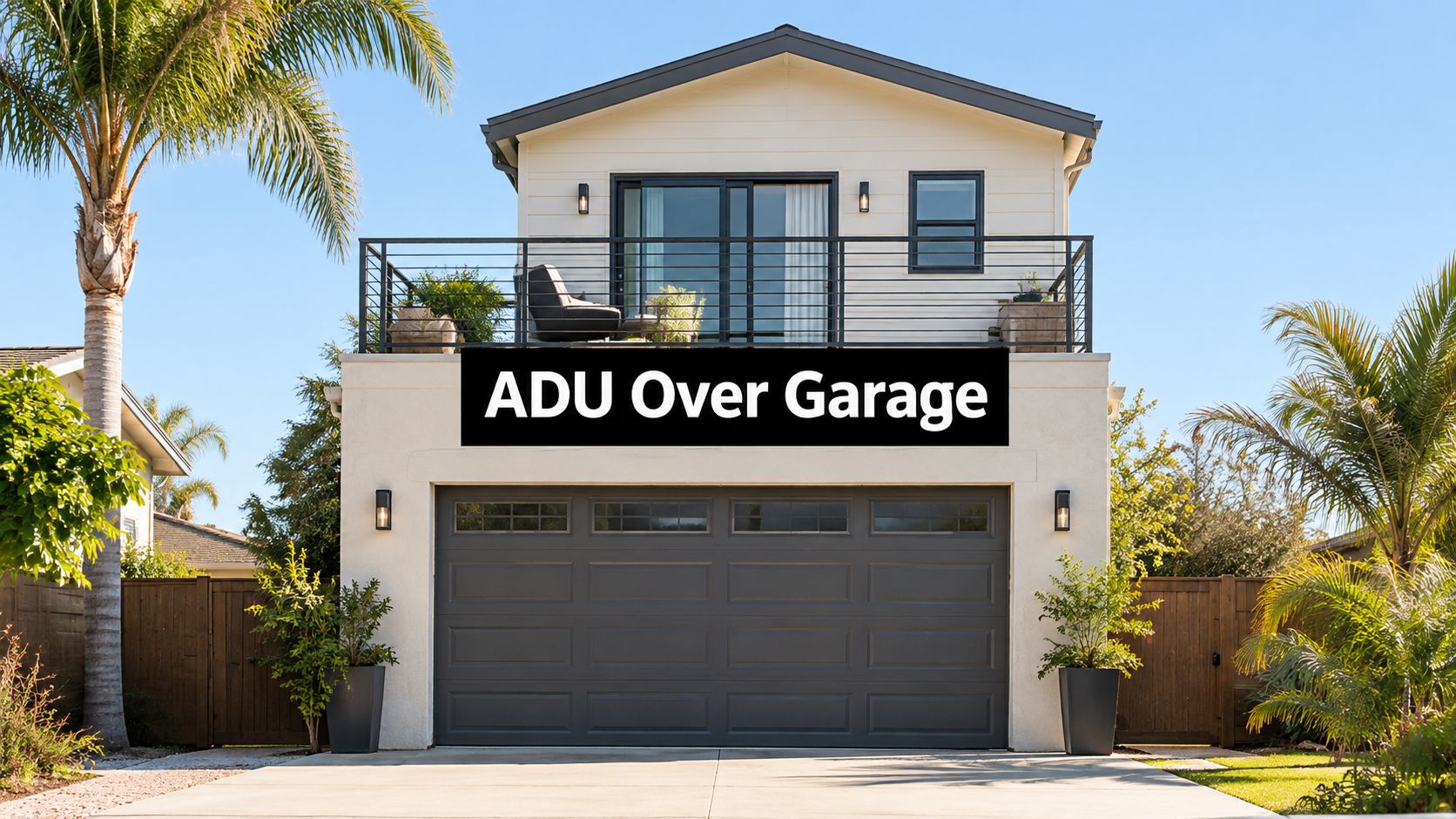
For ADU-related luxury projects, one technical benchmark from California's statewide ADU rules shows why front-loaded planning matters. Detached ADUs can be up to 1,200 square feet, and local agencies may only impose objective, uniformly verifiable standards rather than subjective design judgments, according to the California ADU handbook. The broader lesson for high-end builders is practical. Entitlement risk often shifts toward measurable compliance, so site planning, dimensions, and code or HOA coordination need to happen before permit submittal.
Construction and closeout
Construction itself moves in layers. Site work and foundations come first. Framing follows. Then rough mechanical, electrical, and plumbing systems go in before insulation, drywall, millwork, tile, paint, lighting, and specialty finishes.
Client involvement doesn't disappear here. It changes. Instead of broad design direction, your role becomes review and confirmation at key checkpoints.
A clean closeout matters just as much as a clean start. Final walkthroughs, punch corrections, systems orientation, and warranty support separate a polished luxury experience from a stressful finish.
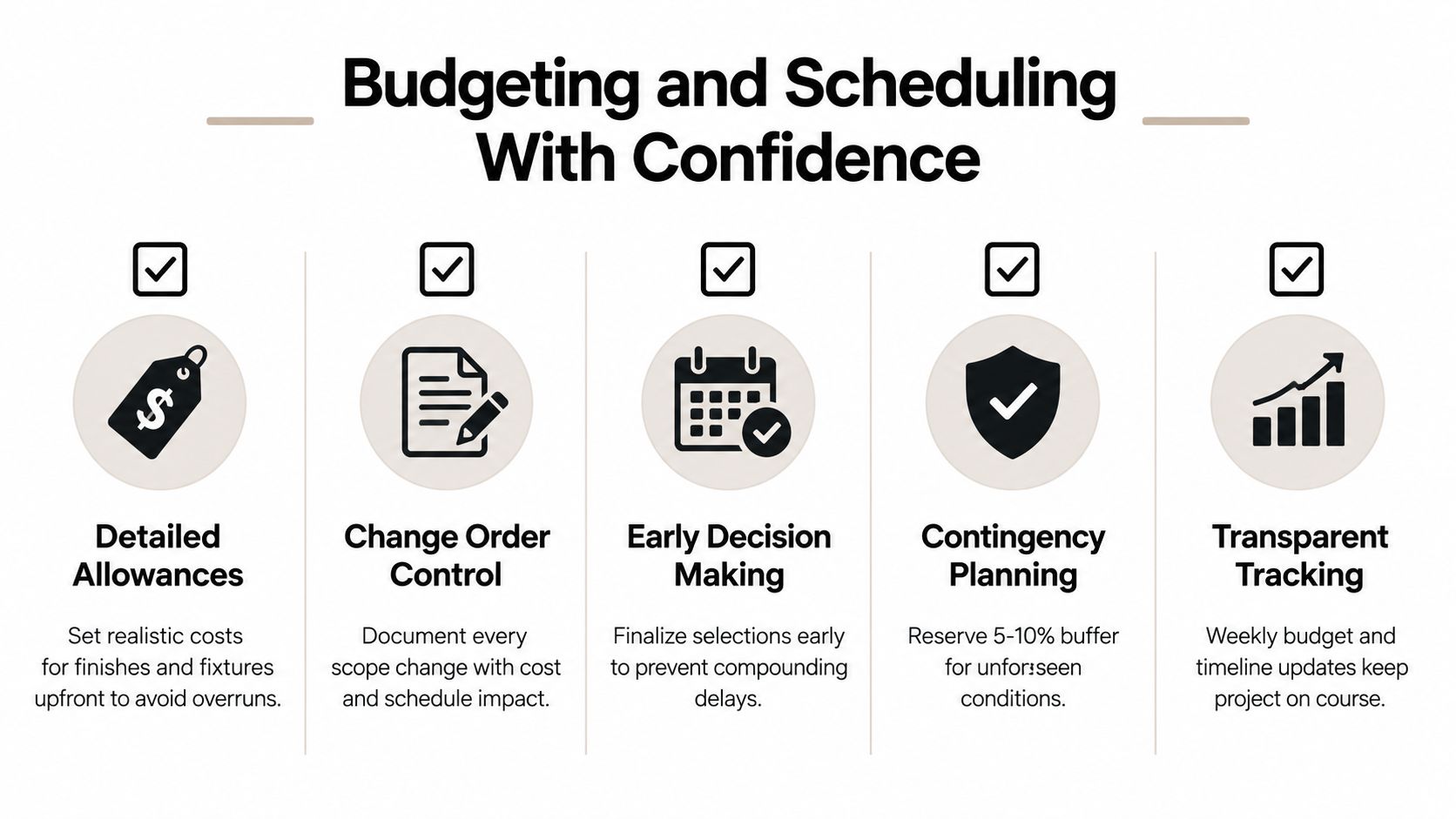
Budgeting and Scheduling With Confidence
Luxury clients rarely object to paying for quality. They object to preventable drift. That's an important distinction.
The biggest budget and schedule problems usually don't begin with one dramatic mistake. They begin with a series of small unresolved decisions. An allowance is set too low. A finish remains undecided. A layout tweak happens after framing. A material lead time wasn't discussed soon enough. Each one seems manageable on its own. Together, they pull the project off course.
Why budgets drift
Industry guidance for custom residential work says 30 to 50% of projects exceed their original budget, with overruns typically in the 20 to 40% range, often because allowances are set too low and mid-build changes are priced after work starts, according to Benson Construction Group's budget cost control guidance. That's a useful warning for luxury clients because custom work naturally includes more decisions, more detail, and more opportunities for late revisions.
The practical lesson is clear. The highest control point is pre-construction.

Controls that actually work
If you want a budget that behaves, ask your builder how they protect it before contract execution and during active construction.
Use this short test:
- Lock selections early: Finishes, fixtures, appliances, and performance expectations should be defined before the contract is finalized whenever possible.
- Get written change order impacts: Every requested change should show cost and schedule effects in writing before the work proceeds.
- Watch allowances carefully: A low placeholder can make an early budget look comfortable while hiding later pressure.
- Track procurement timing: A beautiful item that arrives late can disrupt multiple downstream trades.
- Expect documented updates: A verbal “we're on track” isn't enough for a complex luxury project.
Late selections don't only affect cost. They force crews to stop, return, resequence work, or install temporary solutions.
Scheduling is really sequencing
Clients often ask for a timeline as though it's a static calendar. On a luxury project, the schedule works more like a chain of dependencies. Cabinetry affects templating. Templating affects countertop fabrication. Countertops affect plumbing trim-out. Lighting decisions can affect ceiling details, switch locations, and millwork coordination.
That's why schedule discipline doesn't feel rigid when it's done well. It feels protective. It keeps your project from absorbing avoidable friction.
When interviewing Custom Luxury Home Builders, ask to see how they handle selection deadlines, weekly communication, and approval checkpoints. An answer that sounds less like optimism and more like a management system is what you want.
New Custom Homes Versus Luxury Whole House Remodeling
Some families know immediately that they need a new house. Others have a strong location, mature landscaping, or a neighborhood they don't want to leave. That's where the choice between ground-up construction and luxury whole house remodeling becomes more strategic than emotional.
A new custom home gives you the most freedom. You can shape circulation, orientation, room sizing, ceiling heights, indoor-outdoor connections, and support spaces around your lifestyle from day one. It's often the right path when the existing house has structural, layout, or systems limitations that would force compromises.
A whole house remodel is different. You're working with an existing shell, existing conditions, and often a location that already has strong value. That path can make excellent sense when the neighborhood is right and the structure offers enough potential to justify a deep rework. If you're weighing renovation possibilities, Emery Lane's luxury renovations and remodels page shows the kind of scope these projects can include.
Choosing based on constraints
The right answer usually comes from what you're trying to preserve.
- Choose a new build when your top priorities are full layout control, fresh systems, and a home created without inherited compromises.
- Choose a remodel when the location is difficult to replace and the house can be transformed meaningfully through reconfiguration, additions, and upgraded finishes.
- Consider an ADU when you need guest space, multigenerational flexibility, or a separate suite with independent function.
ADUs deserve special attention in luxury planning because they seem simple on paper but depend heavily on measurable compliance. Size limits, setbacks, access, and HOA coordination can shape whether a detached casita works cleanly on the site.
Choosing Between New Build and Whole House Remodel
| Factor | New Custom Home | Luxury Whole House Remodel |
|---|---|---|
| Layout freedom | High freedom to shape circulation, privacy, and room relationships from scratch | Works within existing structure unless major reconfiguration or additions are planned |
| Site strategy | Best for optimizing orientation, views, garages, outdoor living, and guest structures | Best when the lot and neighborhood already fit your goals |
| Unknown conditions | Fewer surprises from hidden existing systems | More investigation needed because walls, structure, and utilities may reveal issues during work |
| Lifestyle disruption | Clear build path if you're not living on site | May require temporary relocation depending on scope |
| Design opportunity | Cohesive architecture and systems from the start | Strong option when updating an outdated home in a highly desirable area |
| ADU integration | Easier to plan from the beginning as part of the overall site | Possible, but often more dependent on site fit and existing placement |
Why Emery Lane Luxury Homes Stands Out in Scottsdale and Paradise Valley
A luxury home can look stunning at a walk-through and still create daily friction after move-in. The pantry may sit too far from the garage. Guest circulation may cut through private areas. Outdoor spaces may look generous but feel disconnected once you start hosting real people.

That is why the right builder serves as more than a contractor. In high-end residential work, the builder is also a risk manager for budget, schedule, and livability. The job is to catch expensive problems while they are still lines on paper, not after framing, stone, and cabinetry are already in motion.
Functional-first luxury
In Scottsdale and Paradise Valley, many clients want strong indoor-outdoor living, privacy for family and guests, and rooms that feel calm instead of oversized for the sake of scale. Those goals sound straightforward. They become expensive fast when the plan puts looks ahead of use.
Emery Lane Luxury Homes approaches luxury from the function side first. Circulation, storage, service zones, sight lines, and daily routines need to work together before finish selections start competing for attention. A well-planned house works like a custom-fitted suit. It should look sharp, but it also has to move with you comfortably every day.
That approach helps prevent one of the costliest luxury mistakes. A beautiful floor plan that fights ordinary life.
Pre-construction discipline matters here
The strongest custom builders reduce risk early. They ask harder questions before construction starts. How will groceries enter the house? Where does morning light matter most? Which spaces need quiet? What details must be resolved now to protect pricing and lead times later?
Those questions shape real outcomes in Scottsdale and Paradise Valley, where HOA review, site conditions, permitting, and neighborhood expectations can affect both design decisions and build sequencing. A disciplined pre-construction process keeps the project from drifting into avoidable change orders and schedule surprises.
Emery Lane's local work in Scottsdale, Paradise Valley, Arcadia, and the Biltmore corridor supports that kind of judgment. Clients can review the company's background on the Emery Lane Luxury Homes team page.
Credibility markers worth checking
A polished presentation is easy to produce. Operational clarity is harder, and more useful.
Here are a few details worth reviewing:
- Established presence: The company was established in 2019.
- Licensing clarity: Active Arizona ROC licenses 349148 and 364913 are listed among its published credentials.
- Team structure: It works with an internal team and coordinates with client-selected architects and designers.
- Closeout support: Its warranty and closeout process includes dedicated QA/QC involvement.
Those markers matter because they point to how a builder handles pressure near the end of a project, when details tighten, inspections stack up, and small misses get expensive.
Your Next Steps to Hiring the Right Luxury Builder
Hiring the right builder gets easier when you stop treating the decision like a style contest. A strong luxury partnership usually comes down to three filters.
First, does the builder think in terms of livability, not just appearance? You want someone who asks how your family moves through the house, where privacy matters, and what should feel effortless on an ordinary Tuesday.
Second, do they bring pre-construction discipline? That means they don't rush past unresolved details. They help define scope, clarify selections, and attach consequences to changes before those changes become expensive.
Third, can they manage local execution in Scottsdale, Paradise Valley, Arcadia, or Biltmore? Design intent has to survive HOA review, permitting, procurement, sequencing, inspections, and closeout. That only happens when the builder knows how to operate in those environments.
A short hiring checklist
Bring these questions into your first serious conversation:
- How do you evaluate fit early? Ask how they assess a lot, an existing home, or an ADU opportunity before design advances too far.
- What must be decided before contract? Their answer will tell you how seriously they take scope control.
- How do you communicate schedule movement? Look for a system, not reassurance.
- Who coordinates architect, designer, and trades? Accountability should be clear.
- What happens after substantial completion? Warranty and punch-list support should be structured, not vague.
If you're ready to narrow your options, start with a real conversation about feasibility, budget alignment, and timing. That first step often reveals more than a glossy portfolio ever will. For clients in greater Scottsdale, the easiest place to begin is through Emery Lane Luxury Homes' contact page.
Luxury should simplify your daily life. It should make the home work better, feel calmer, and age more gracefully. The right luxury-rated contractor helps you get there by managing risk before it shows up on site.
Emery Lane Homes offers custom luxury home building, luxury whole house remodeling, ADU planning, and design-build guidance for homeowners in Scottsdale, Paradise Valley, and nearby high-end neighborhoods. If you want a team that treats budget, schedule, and livability as connected parts of the same project, visit Emery Lane Homes to start the conversation.