You can have a house that looks flawless on paper and still feel wrong in daily life. The kitchen may be beautiful, the finishes may be expensive, and the architecture may impress visitors, but if family members keep crossing paths in the wrong places, guests walk straight through private zones, or a casita gets planned too late to fit the lot cleanly, the home starts fighting the people who live in it.
That's where luxury estate builders matter. In Phoenix, Scottsdale, Paradise Valley, Arcadia, and the Biltmore corridor, the job isn't just creating a bigger house. It's building a home that handles privacy, wellness, multigenerational living, service flow, and long-term flexibility without turning everyday routines into a series of compromises. The custom luxury home building market was valued at USD 57.12 billion in 2024 and is projected to reach USD 109.74 billion by 2030, with a CAGR of 11.33% from 2025 to 2030, and one industry report identifies North America as the largest market and the upper-luxury USD 2–5 million segment as the fastest-growing band (TechSci Research). That growth matters because it points to a segment where clients expect more than finishes, they expect coordination, control, and thoughtful livability.
If you're evaluating a custom build, a major remodel, or an estate-scale addition, the right questions are often the ones people skip at first. Does the floor plan support how your household really moves? Will the site, HOA, and permitting path slow you down? Is a remodel smarter than starting over? This guide walks through those decisions in plain language, with Phoenix-specific realities in mind, so you can judge builders by how well they solve the whole problem, not just the pretty parts.
Introduction to Luxury Estate Building Done Right
A lot of first-time estate clients start with a simple frustration. The home is attractive, but mornings feel crowded, deliveries end up in the wrong place, and private spaces never stay private. The problem usually isn't the size of the house, it's the way the house was organized.
That's why luxury estate builders exist as a distinct category. They're not just constructing rooms, they're managing a high-stakes layout where architecture, structure, mechanical systems, interiors, and site logistics all have to work together from the start. A home at this level has to support daily life with the same care it gives to visual impact.
What changes when the home gets more complex
At estate scale, the work shifts from “Can we build it?” to “Can we build it so it lives well for years?” That change sounds subtle, but it affects nearly every decision, from where the primary suite sits to how a service hallway connects to the kitchen without disrupting guests. In high-end neighborhoods, that kind of planning matters as much as the veneer, the stone, or the lighting.
Luxury also means different things than it did a generation ago. A historic example is The Dakota in New York City, completed in 1884 after a four-year construction project and widely described as the first building designed specifically as a luxury apartment house for the upper-class residential market in New York City (The Roebling Team). The lesson still holds. Luxury has always been about exclusivity, architectural distinction, and client-specific delivery, not mass-market repetition.
For Phoenix-area homeowners, that distinction is practical. A well-run estate project should feel calm, even when the site, the approvals, and the trade coordination are anything but calm. If you're comparing builders, you're really comparing who can translate a lifestyle into a building system without losing the details that matter.
Practical rule: If a proposal talks mostly about finishes and almost nothing about circulation, service separation, or permitting strategy, the builder may be thinking like a decorator, not an estate team.
How to use this guide
Think of the next sections as a working map. The first part defines what separates estate builders from standard custom builders. The next part breaks down the capabilities that make a large luxury property livable. Then the guide compares new builds, remodels, and additions so you can judge the right path for your property. After that, it shows how procurement and project management work together, with Phoenix-area realities folded in. The final section turns all of that into a selection checklist you can use in real conversations.
What Defines a Luxury Estate Builder
A standard custom builder can often handle a one-off home with a few unique features. A luxury estate builder has to handle a much larger coordination problem. The easiest way to think about it is this, a custom builder is like directing a single performance, while an estate builder is like running a small city.
The difference is coordination, not just size
Once a project grows into estate territory, every decision starts touching several others. Move a pantry wall, and the kitchen workflow changes. Shift a stair, and mechanical routing may need to change. Expand a spa wing, and the structure, glazing, waterproofing, and lighting all need to be checked together. That's why estate builders rely on integrated preconstruction, not just field execution.
Those projects usually include some combination of design-build delivery, collaboration with client-selected architects and designers, and active management of site conditions, permits, and trade sequencing. The builder is not just holding a hammer and a schedule. They're responsible for making sure the design can be built in the world without creating avoidable conflicts.
What estate-level service really looks like
Estate builders differ from production builders in how they handle uncertainty. Production homes are organized around repetition. Estate homes are organized around exceptions. That means more decisions, more coordination, and more chances for scope to drift if no one is managing the process carefully.
The best builders in this category pay attention to the way people move through the home. They think about guest privacy, family circulation, and the invisible routes that keep daily life efficient. They also know that a beautiful plan can still fail if the site doesn't support it, if the approvals are incomplete, or if the schedule gets pieced together after design decisions are already locked in.
In Phoenix, this matters even more because land conditions, HOA expectations, and neighborhood context can shape what's feasible before construction ever begins. The builder's value is not just in craftsmanship. It's in whether they can orchestrate the entire project without turning a custom home into a long chain of avoidable revisions.
Bottom line: The right estate builder makes a complex home feel simple to live in.
Core Capabilities Behind Large Luxury Properties
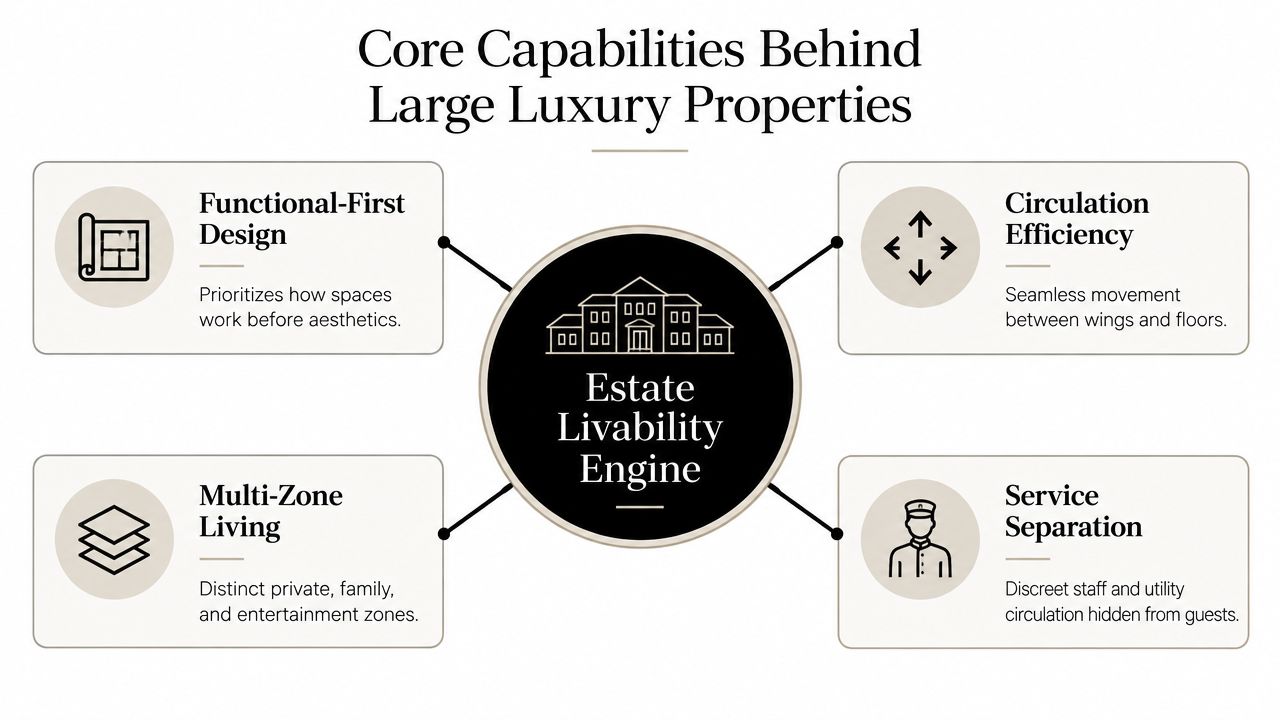
The heart of a good estate project is not a finish package. It's a set of capabilities that keep the home usable after the keys change hands. The most important ones are functional-first design, circulation efficiency, multi-zone living, and service separation.
Functional-first design means the plan starts with how the home works before it starts chasing visual drama. Circulation efficiency means people can move through the house without awkward cross-traffic or dead space. Multi-zone living gives each part of the household the right kind of privacy, whether that's a quiet primary suite, a family wing, or a guest area. Service separation keeps utilities, staff movement, and maintenance paths discreet so the guest experience stays clean.
Why the layout matters more than most buyers expect
Affluent buyers are increasingly asking for wellness infrastructure, biophilic design, low-density layouts, and multigenerational planning, while some older showpiece features are losing appeal (Ashtin Group). That shift changes how an estate should be organized. A home that supports health, rest, aging, and family flexibility often feels more luxurious day to day than one that has more square footage.
The same thinking applies to remodeling. A house can look expensive and still work poorly if the rooms don't connect logically. When builders think in zones instead of isolated rooms, they can create better transitions between public spaces, private retreats, and support areas. That's where the house starts feeling calm instead of crowded.
Quiet luxury is often just good routing. If people, guests, and service functions each have a clear path, the whole house feels more composed.
Why preconstruction is where projects win or lose
Integrated preconstruction is what keeps all of this from unraveling later. That means lot due diligence, HOA document review, trade coordination, scheduling, and contingency management before the first major build decisions are finalized. If those pieces happen too late, conflicts show up between structure, glazing, wet areas, and mechanical routing.
That's also why owners should expect budget planning and QA/QC to be tied together. A schedule without design coordination is fragile. A budget without entitlement review is incomplete. A quality process without clear sequence control is just inspection after the fact.
For owners comparing renovation paths, the practical difference is noticeable. A builder who studies the site, the documents, and the build sequence early can usually reduce the kind of late changes that create friction and cost pressure. For a broader view of that approach, see Emery Lane Homes' luxury renovation and remodel services.
New Build Versus Major Remodel and When Each Makes Sense
A luxury project can start in two very different ways. Some properties are better served by a remodel, where the existing shell still supports the plan. Others work better as a new build, especially when the home's bones, circulation, or site constraints keep getting in the way. The right path depends on what can realistically change without creating more friction than value.
Comparing the three main paths
Luxury remodeling can range from about $100 to $700+ per square foot depending on market and project depth, and whole-home projects or structural additions can run into six or seven figures (Landis Construction). Another industry breakdown notes an 85/15 split, where labor and materials dominate, but permits, engineering, architecture, and taxes still consume a meaningful share of the budget. Those soft costs matter because a home can look straightforward from the street and still hide heavy design and coordination work inside.
| Project Path | Best When | Key Cost and Risk Drivers | Timeline Consideration |
|---|---|---|---|
| Custom New Build | The lot works well, the program is highly specific, and the existing home doesn't support the desired layout | Land feasibility, permitting, utility coordination, design scope, and site preparation | Usually more predictable once the site and plan are locked |
| Luxury Whole-Home Remodel | The structure is worth preserving and the owner wants to modernize layout, finishes, and systems | Hidden conditions, structural surprises, selective demolition, and change-order risk | Can stretch when existing conditions conflict with the new design |
| Structural Addition | The owner needs more space but wants to keep the core home | Tie-ins to the old structure, code compliance, rooflines, and utility rerouting | Often more complex than it first appears because the old and new work must integrate cleanly |
A remodel can be the right move when the shell is strong and the home mainly needs better finishes, updated systems, or a smarter plan. It becomes harder to justify when walls need to move, the structure limits circulation, or the old layout keeps fighting the way the family lives. In those cases, you can spend a lot of money correcting symptoms without fixing the root problem.
A new build can feel larger in scope, but it often gives the team a cleaner starting point. That matters for wellness, natural light, room flow, and the ability to support different generations under one roof. In practice, it works like choosing a blank sheet of graph paper instead of erasing a sketch that already has too many bad lines.
Existing conditions usually decide the issue. Older luxury homes can hide problems behind walls, under slabs, or inside outdated systems. So the question is not only what the house should become, but how much the structure will cooperate without forcing compromise at every turn.
For owners who want that evaluation to start with the property itself, Emery Lane Homes' built-to-suit approach shows how a builder can study the lot first and shape the scope around what the site can support.
How Procurement and Project Management Actually Work
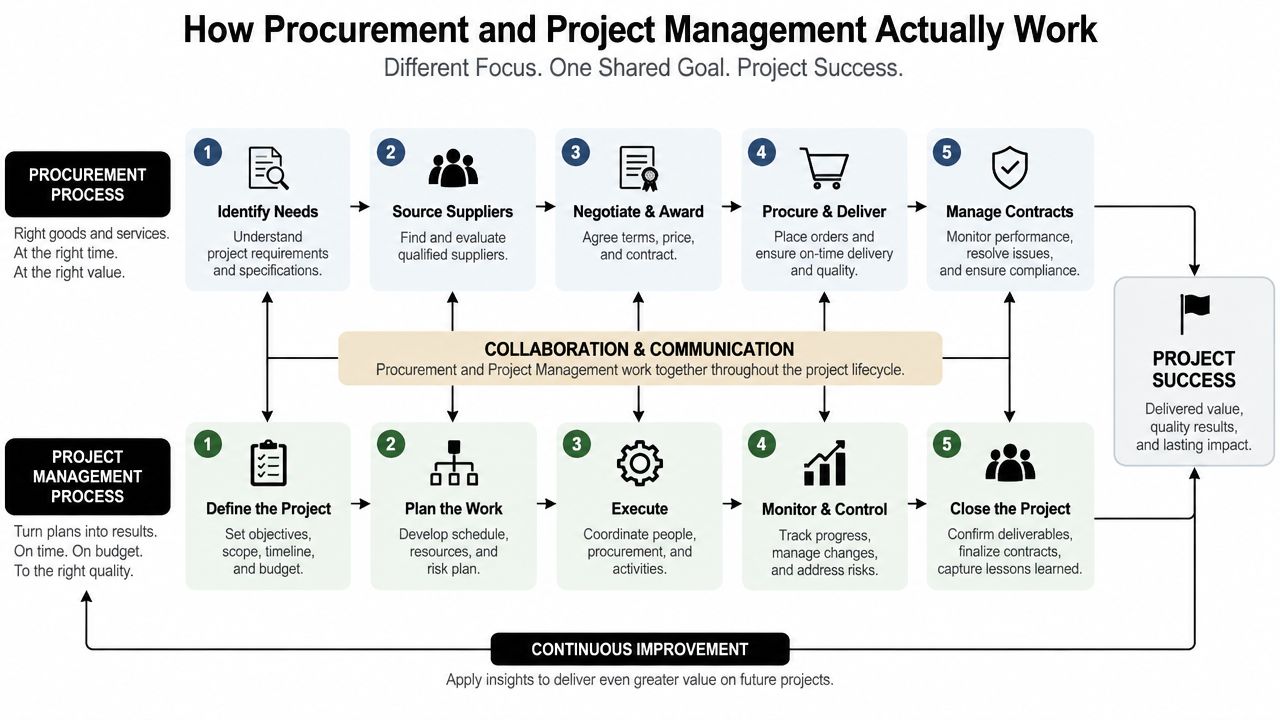
Good estate projects move through a sequence, not a blur. When owners understand that sequence, they can make decisions earlier and avoid the kind of last-minute scrambling that creates stress on site.
The workflow in plain language
The first step is lot selection and feasibility, because the land determines a surprising amount of the final result. After that comes pre-construction planning, where the builder and design team test the layout, identify constraints, and line up the major decisions before anyone starts building. That stage is where the schedule starts becoming real.
Next comes permitting and HOA submissions. For complex homes, that's not paperwork in the background. It's an active part of the project. Submittals, revisions, and review cycles affect when trades can mobilize and when materials can be ordered. Once approvals are in motion, the team can refine budgeting and scheduling with better confidence.
What owners should expect during construction
During construction, the builder's job is to keep trade sequencing logical and communication steady. That means concrete, framing, rough mechanical work, waterproofing, glazing, and interior scopes all have to be timed in the right order. If the sequence slips, expensive rework tends to follow.
Practical rule: Ask how often you'll get updates, who controls change orders, and how the team handles conflicts between design intent and field conditions.
A good project manager watches for issues before they become visible. That includes schedule drift, missing decisions, and coordination gaps between the architect, engineer, and subcontractors. It also includes making sure inspections, QA/QC, and closeout don't get treated as afterthoughts. Post-completion warranty support matters because a luxury home should come with structured follow-through, not just a final invoice.
The work feels smoother when procurement and management are treated as one process. Materials are ordered with the build sequence in mind. Field decisions are checked against the drawings. The owner stays informed without being buried in every minor detail. That's the difference between a project that moves and one that lurches.
What to Expect From Phoenix Area Estate Experience
A Phoenix estate project starts with the site, not the finishes. In Scottsdale, Paradise Valley, Arcadia, and the Biltmore corridor, the builder has to fit the home to the lot, the neighborhood, and the approval process from day one.
Local conditions shape the entire plan
The custom luxury home market keeps expanding, and North America remains the largest market while the upper-luxury USD 2–5 million band is the fastest-growing segment. For Phoenix owners, that means the work often happens in tightly watched corridors where land use, review timing, and procurement discipline matter as much as the visible details.
HOA review is often the first checkpoint. Many luxury neighborhoods look closely at architecture, massing, materials, and whether the home feels appropriate to the street. If those standards are not addressed early, a project can sit idle while drawings are revised.
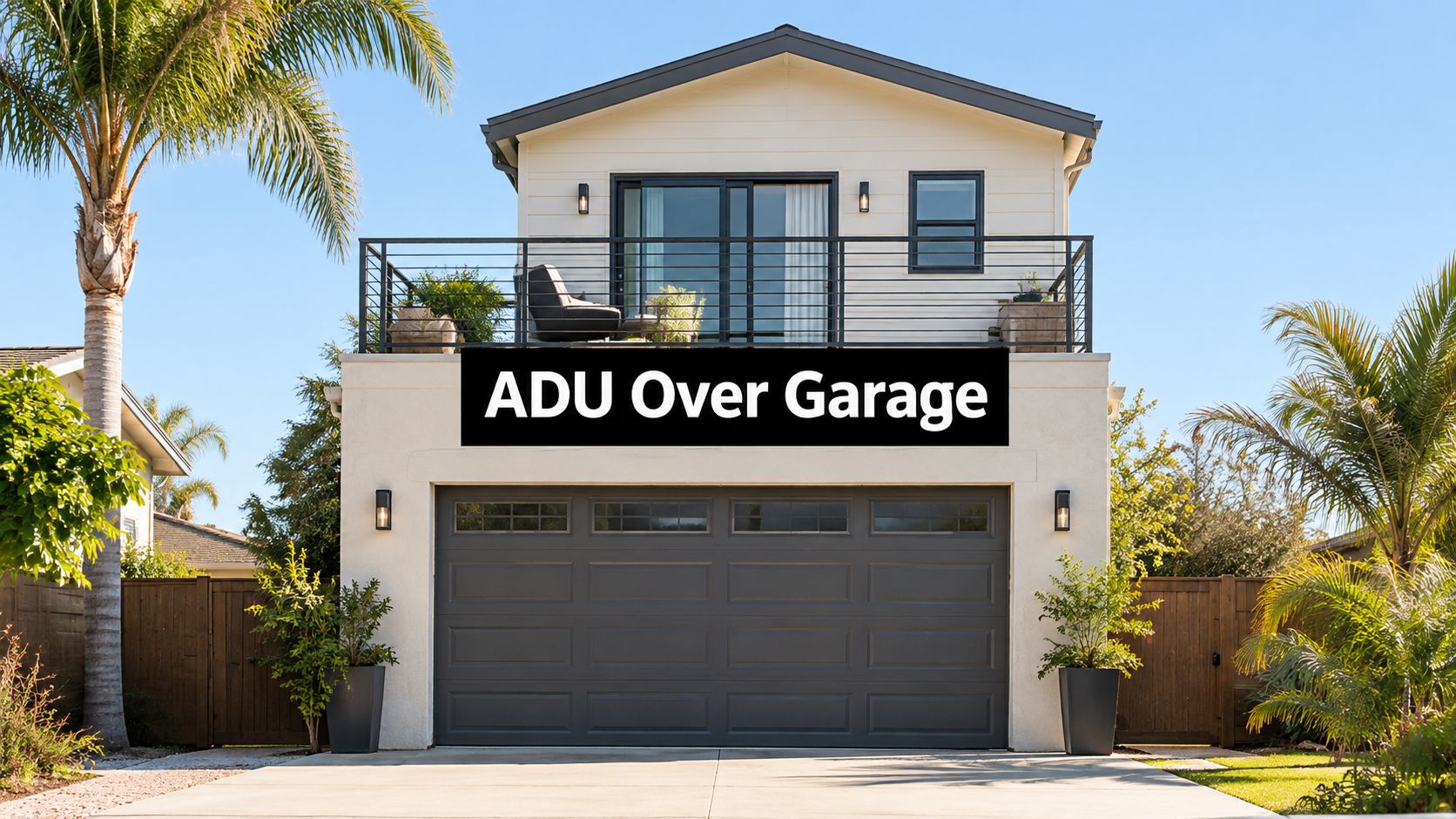
Accessory dwelling units add another layer. They are generally allowed as accessory uses, but they still need local approvals and building permits, and some jurisdictions require specific code provisions or appendices (ALEC model policy). A casita or multigenerational suite is not just a smaller house. It affects site planning, utility routing, and entitlement sequence.
The same is true for major remodels. A project in Paradise Valley may look straightforward from the street, but the path from concept to construction still depends on local review, existing conditions, and how the team stages the work. Emery Lane Homes' Paradise Valley remodeling page shows how a Phoenix-area builder can shape that process around neighborhood expectations.
Why livability trends matter in this market
Phoenix luxury buyers are asking different questions now. They still care about finishes, but they also want wellness-oriented rooms, good circulation, and spaces that adapt as the household changes. That is the practical side of estate living, like planning the rooms in a house so daily movement feels natural instead of forced.
Long hallways, disconnected service areas, and awkward room placement create friction over time. A well-planned estate reduces that friction by separating guest, family, and service paths, and by making the home easier to use as needs shift. That matters for privacy, aging in place, and multigenerational living.
Phoenix also adds procurement realities that clients do not always see at the start. Material lead times, neighborhood rules, and the timing of inspections can shape the schedule just as much as design choices do. A builder who understands the local sequence can keep the project moving without treating livability as an afterthought.
For owners, the lesson is simple. In Phoenix, a successful estate is not only beautiful, it also works well in daily life and holds up under local review, site constraints, and long-term use.
Choosing the Right Luxury Estate Builder With Confidence
A strong luxury builder should be able to explain how a home will function before they talk about finishes. That's the first filter. If a team can't clearly discuss circulation, privacy, multigenerational use, or service separation, they're not yet speaking the language of estate living.
What to verify before you sign
Look for functional-first design, transparent communication, integrated preconstruction, HOA and permitting fluency, and a structured warranty process. Then test those claims against real projects. Ask to see estate-scale work, major remodels, and examples of how the builder handled schedule and budget pressure. If the answers stay vague, that's useful information.
You can also ask practical questions that reveal how the team works.
- How do you manage design changes? A builder should describe a clear change-order process, not hand-wave the issue away.
- Who coordinates architect, designer, and engineer? If no one owns that coordination, the project tends to fragment.
- How do you handle HOA and permitting reviews? In Phoenix luxury neighborhoods, this answer matters a lot.
- What does your warranty support look like after completion? Good builders stay involved through closeout and beyond.
Luxury is not just about grandeur. It's about how well the house supports health, privacy, aging, and daily routines without creating friction. That standard is what separates a visually impressive home from one that feels good to live in.
If you're interviewing builders in Scottsdale, Paradise Valley, Arcadia, or the Biltmore corridor, choose the team that can explain the process in plain language and show you where risks get controlled. A polished presentation matters, but a clear operating model matters more.
If you're planning a custom home, remodel, or ADU in the Phoenix luxury corridor, talk with Emery Lane Homes about how your site, layout, and approval path fit together. Visit Emery Lane Homes to explore design-build services, renovation support, and estate planning for homes that work as well as they look.