
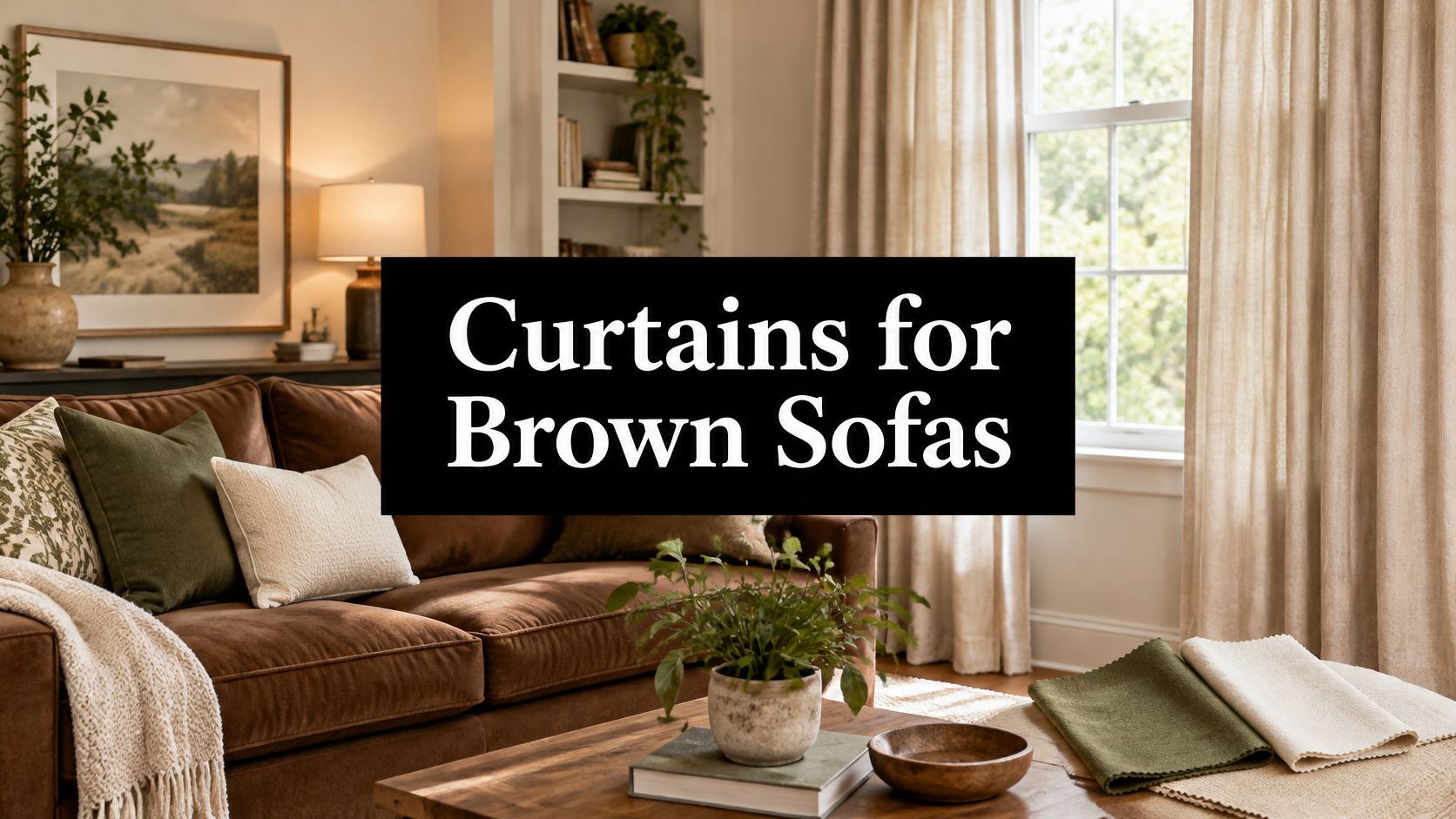
A chocolate brown leather sectional can anchor a Scottsdale great room, yet old drapes that are too gold, too short, or too thin for the afternoon sun can leave the room feeling heavy and unfinished.
Brown upholstery carries visual weight and warmth. A curtain's value, undertone, and fabric determine whether the sofa stands out or sinks into the room. Cool gray-brown upholstery, for example, can make a warm cognac curtain look muddy.
The eight recipes below pair specific fabrics with undertone guidance, hanging measurements, and light-exposure caveats for high-end Arizona interiors. They cover bright neutrals, earthy shades, and stronger accents.
For a brown sectional suited to daily family use, these family-friendly sofa ideas for Succasunna offer a related example. For curtain decisions, start with the window wall. It is the room's largest vertical surface, and its light and proportions shape how the sofa and fabric read together.
1. Crisp White Linen Drapes for Brown Sofas
White linen is the cleanest lift you can give a dark brown sofa. In a Scottsdale great room, floor-to-ceiling ivory linen panels beside a chocolate leather sectional frame the desert view without competing with it. In Paradise Valley, the same treatment softens a dark walnut media wall and keeps a transitional room from reading as a cave.
Don't buy stark optical white. It turns blue beside warm leather and looks cold at night. Choose warm ivory, soft white, or natural flax instead, and hold the swatch against the sofa arm in daylight before you order.
How to Specify It
Unlined linen looks beautiful in a photo and disappointing on a west wall. It wrinkles, glows orange when backlit, and offers almost no glare control. I recommend a lined or interlined linen, or a linen-look polyester blend, for any room that gets direct sun.
- Rod placement: Mount 4 to 6 inches above the frame and extend 8 to 12 inches beyond each side so the stack clears the glass.
- Length: Break the panel 1/2 inch above the floor for a neat look that doesn't collect dust.
- Grounding layer: Add a warm wool or cream rug so white and brown don't feel stark.
- Sun control: Add a blackout liner on south and west exposures.
For fabric quality reference, these luxury window treatments for Atlanta interiors show the weight and weave to look for. You can see how pale drapery performs in finished Arizona rooms in our project gallery of completed luxury homes. The trade-off is maintenance. Pale linen shows dust and pet contact faster, so plan on removable panels and professional cleaning.
2. Warm Cream Sheers Layered With Blackout Panels
At 2 p.m. in a Biltmore-area family room, one panel cannot do both jobs. Motorized cream sheers stay drawn through the glare. Blackout panels stack clear of the glass. Both close for movie night. In Arcadia, champagne sheers over a cognac sofa soften morning sun without turning the room yellow.
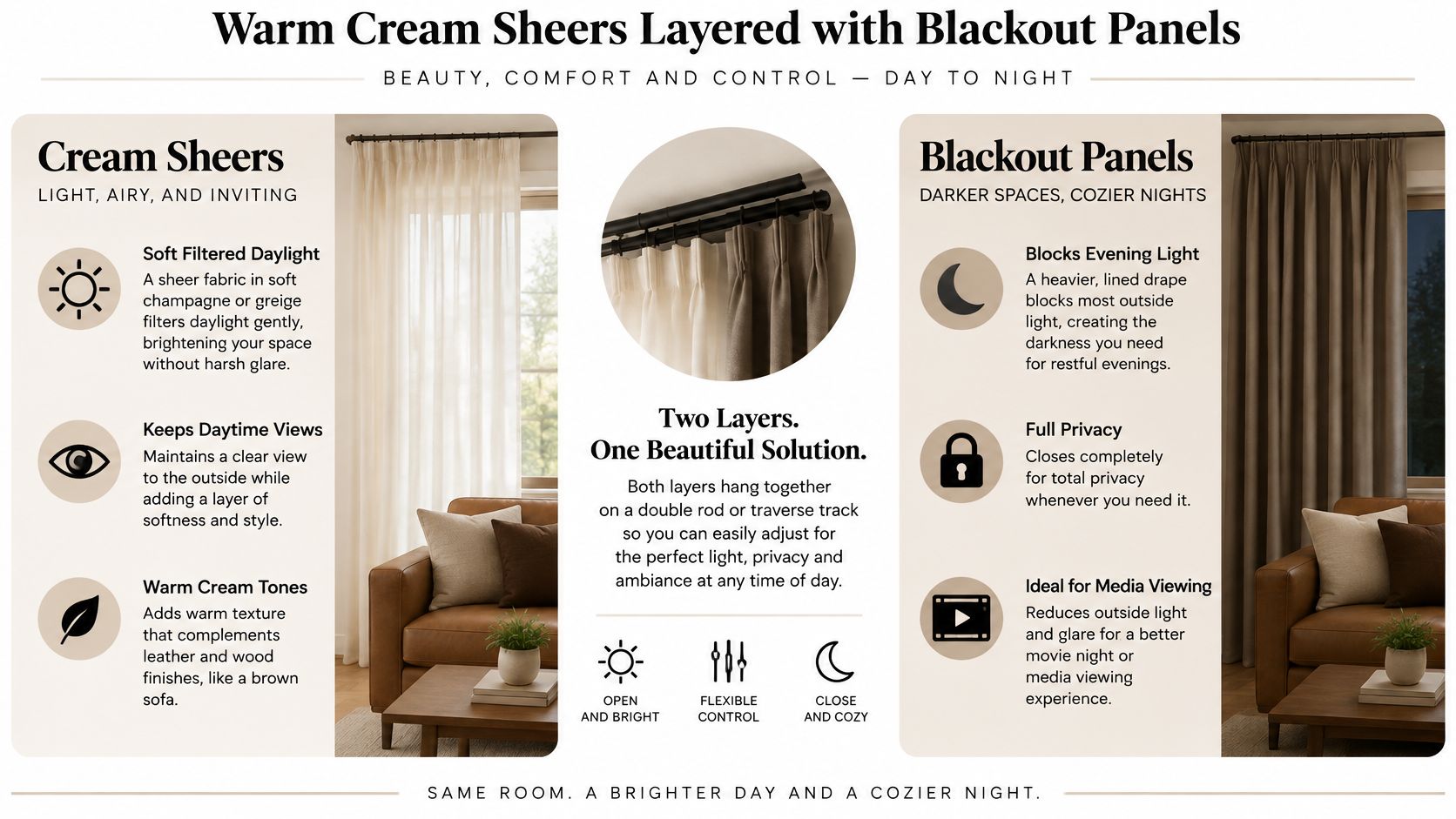
The sheer keeps the view and cuts brutal midday light. The blackout behind it gives privacy, a dark room for media, and cover for leather and wood. In Phoenix, the fabric name is a weak spec. A tighter weave and a real lining control solar heat gain better than a more open cloth in the same cream. Use the sheer alone on a mild east exposure if you want the garden in view. On west glass, that same sheer lets heat and glare through once the sun drops low.
Specify the Pair
Pick a cream or champagne sheer one to two shades lighter than the wall, so the brown sofa stays the darker mass. A yellow-cast sheer will stain cognac leather in morning light. Hang both layers on a double traverse rod or a ceiling track so each stack travels on its own across a wide opening. Keep the track high on tall glass, and leave side stack room so the sheers can cover the pane while the blackouts park off the view.
Order the motor before drywall or trim closes access. Hardwire it if the walls are still open. Use a rechargeable motor only when that pocket is already gone. Match the metal to the lighting fixtures, not the sofa, or the hardware reads as a second finish.
Practical rule: If you can clearly see the outline of your hand through the sheer at noon, you need the lined layer behind it on any west-facing glass.
3. Sage Green Curtains for Earthy Brown Sofas
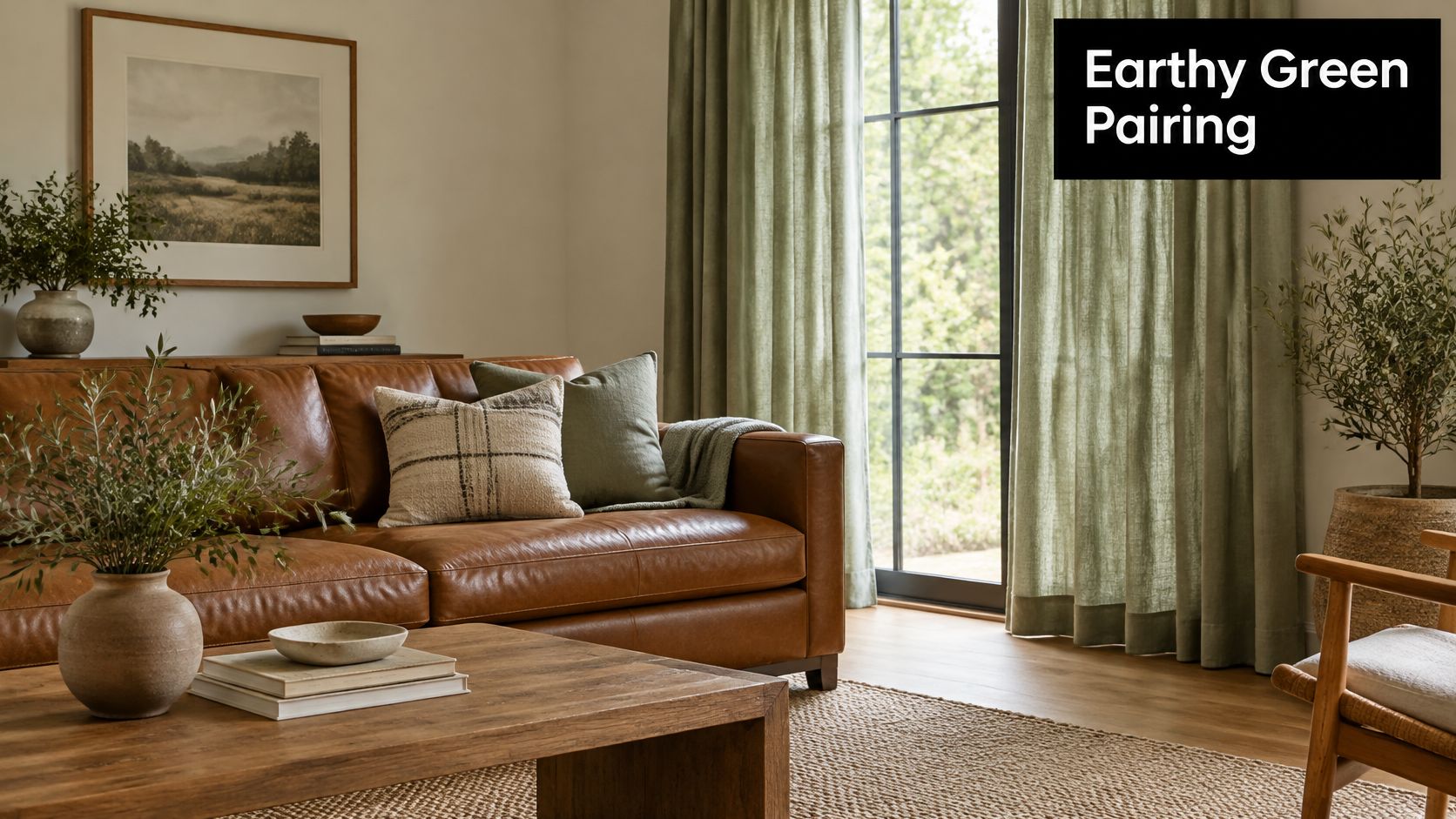
Sage earns the pairing when it is muted enough to read as scenery, not as a brighter accent. Brown and green already sit together outside the glass, so the drapery should repeat that relationship.
A Paradise Valley living room with olive linen drapes, a tan leather sofa, and travertine floors looks settled rather than styled. In Scottsdale, sage cotton panels echo courtyard planting and pull that green indoors. Nature-inspired neutrals are widely expected to stay popular, and this is the usable version of that idea: one muted green, treated like a finish.
Getting the Green Right
The failure mode is a clean, minty green. It clashes with red-based chocolate and looks pastel beside cognac. Choose a grayed sage or olive with a soft yellow undertone, and sample it beside the sofa in morning light and again near sunset. Hard Arizona noon light washes a pale sage toward mint, so a deeper olive holds on west-facing glass.
I match the cloth to the sofa. Olive linen stays matte beside warm tan leather. Sage cotton is the lighter choice when the courtyard is already green, but line it on afternoon sun or the leading edge fades first. Set the rod close to the ceiling and hem the panels so they just meet the floor.
Brass or aged bronze hardware strengthens the earthy palette without adding another color. Balance the green with cream pillows and a pale rug so the room stays bright. If your brown leans cool and gray, shift toward dusty sage. If it leans warm and orange, olive is safer.
You'll see this restraint in the move-in-ready interiors among our luxury homes currently for sale, where the curtain color repeats a natural tone rather than inventing a new accent. Don't add a second green in a different saturation. One green, repeated in a plant or pillow, is enough.
4. Terracotta and Rust Velvet Drapes
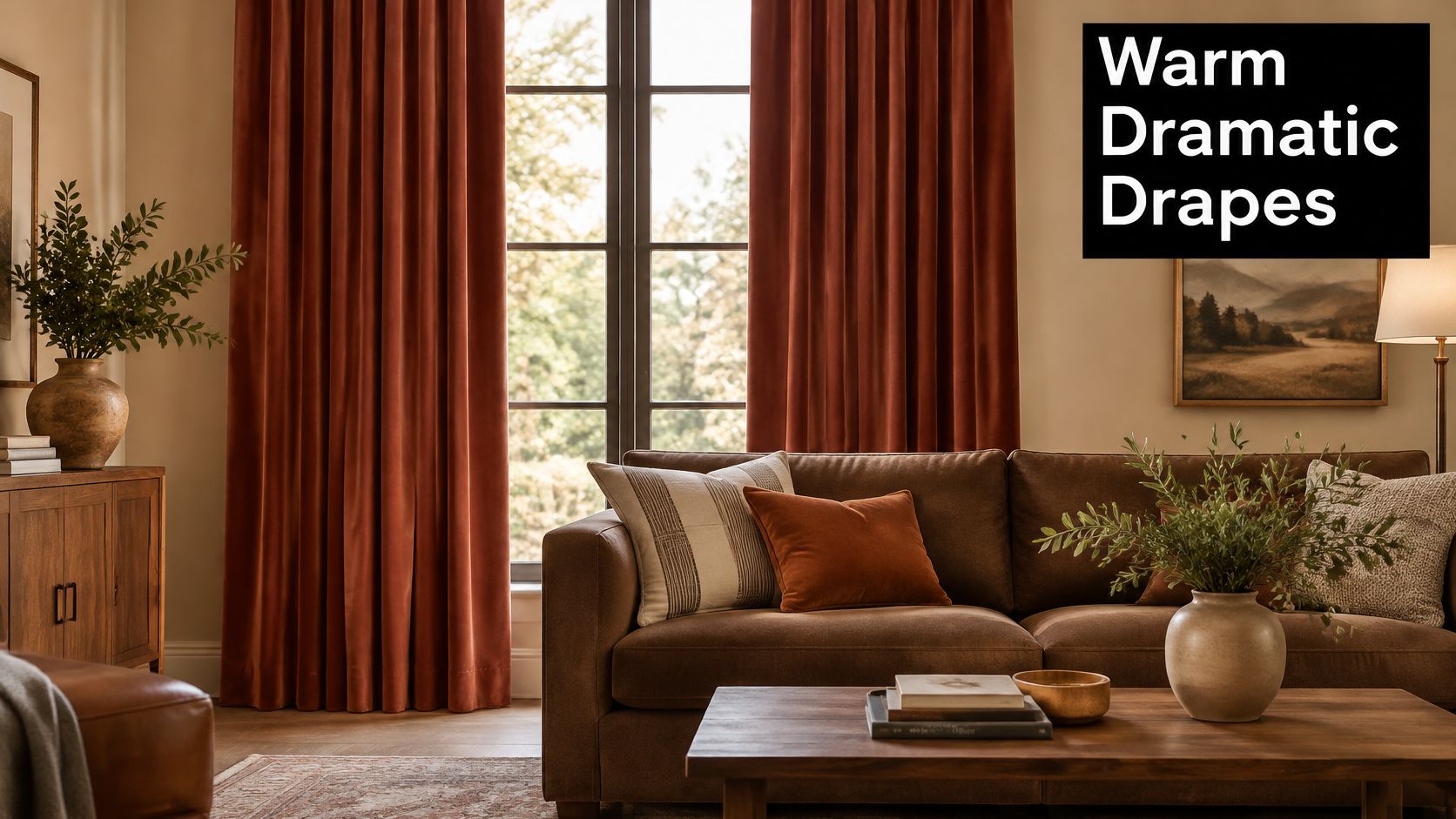
Rust velvet beside a brown sofa is a commitment, and in the right room it's the best one on this list. A Scottsdale great room with rust velvet drapes, a cognac leather sofa, and hand-troweled plaster walls feels warm without a single patterned fabric. In the Biltmore corridor, terracotta panels can echo clay roof tiles you see from inside, which ties architecture to furnishing.
The risk is heat overload. Brown, rust, warm wood, and warm stone can collapse into one orange mass by evening.
Keep the Warm Palette in Check
Limit yourself to three warm tones in the whole room. If the sofa is cognac and the drapes are rust, your rug and walls should go quiet in sand, oatmeal, or warm ivory.
- Contrast accent: Add one cool note, such as a muted blue or sage pillow, to stop the palette from going flat.
- Fabric build: Specify lined velvet with blackout backing for light control and to protect the pile from fading.
- Rod strength: Use a substantial rod with center supports, because lined velvet is heavy and will bow a light rod.
- Pleat choice: A pinch pleat keeps velvet looking architectural rather than theatrical.
Velvet shows every change in light direction, so hang a full-width sample for a day before you commit to yardage.
I wouldn't use rust velvet in a small, north-facing room with an espresso sofa. There's not enough light to separate the tones, and the result reads as brown on brown.
5. Deep Navy Curtains for a Refined Contrast
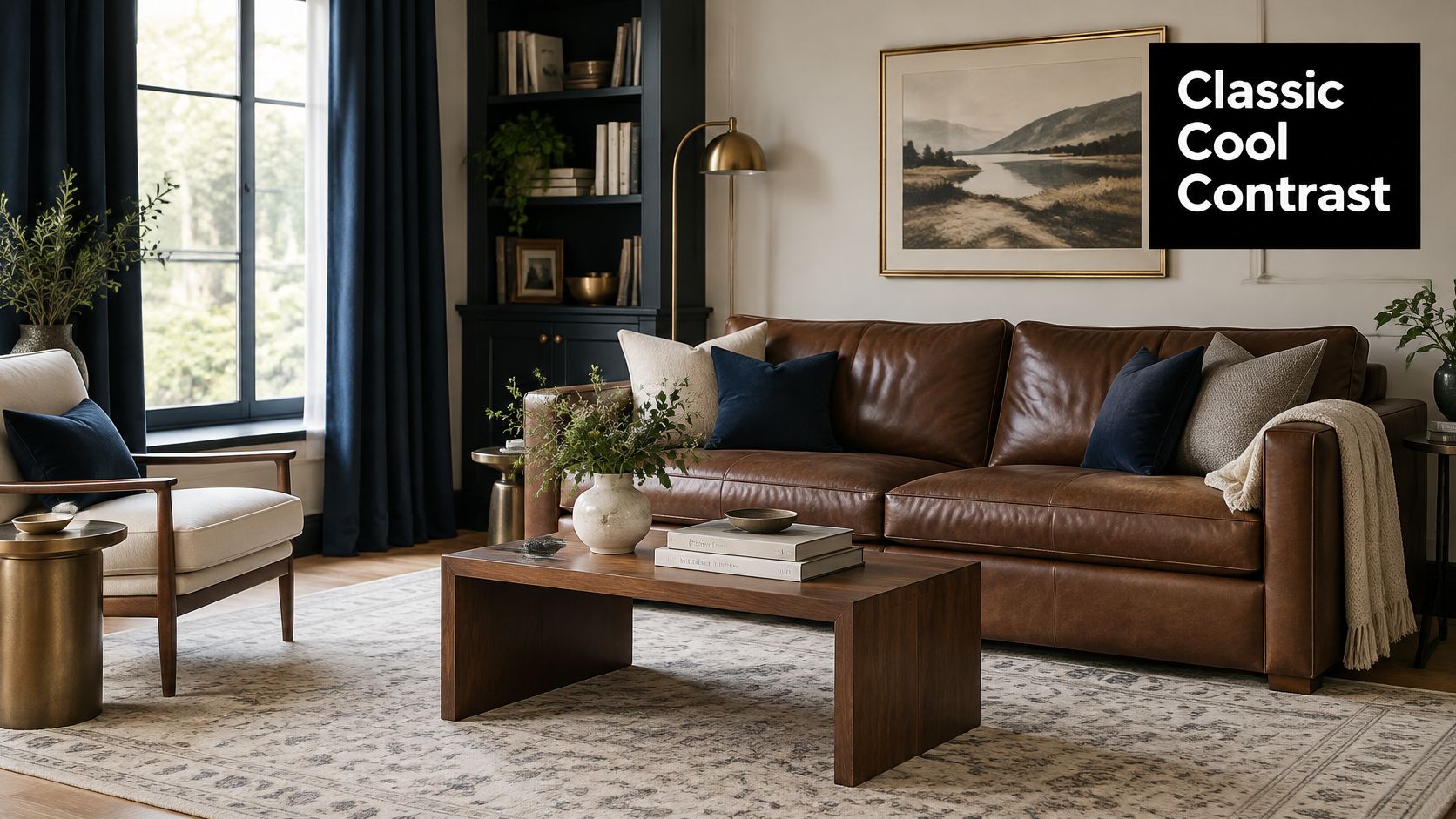
Navy is the strongest defensible contrast for brown, and color theory explains why. Brown is commonly treated as a muted form of orange, which makes blue its complement, and Adobe's guide to complementary colors identifies brown and deep turquoise as a combination associated with serenity and authenticity. Navy gives you that contrast in a quieter, more residential register.
In Paradise Valley, navy wool drapes with a chocolate leather sofa and brass floor lamps read as classic and calm. In a Scottsdale sitting room, navy velvet frames a fireplace flanked by walnut built-ins and makes the wood look richer.
What Navy Needs Around It
Navy absorbs light. That's useful on a bright wall and a liability in a dim one, so budget for sconces and table lamps rather than relying on ceiling cans. Choose a navy with slight gray undertones. A pure, saturated navy can look nautical beside orange-based leather.
Keep hardware in brass or warm bronze to bridge the cool curtain and warm sofa. Pair the combination with light walls or a pale rug so the two dark masses don't merge. During larger projects, this is exactly the kind of finish coordination handled early in our luxury renovations and whole-home remodels, before paint and lighting are locked.
6. Charcoal Gray Curtains for Modern Brown Sofas
Specify charcoal when the sofa is already warm and the room needs a cooler edge. In a Scottsdale living room, charcoal linen over a cognac leather sofa and a live-edge oak table keeps the brown and drops the lodge look. In modern Arcadia, slate panels against chocolate suede and polished concrete give contrast without adding another color.
Blue-gray is the mistake with red-based brown. The curtain reads dirty. Pillows will not correct it.
Match Undertones, Not Color Names
Pull the gray from the sofa's base tone, then check it against flooring, stone, and metal. Warm browns such as cognac, chestnut, and terracotta-leaning leather want charcoal with a brown-gray cast. Cooler upholstery, taupe and espresso, can take a cleaner slate or a restrained blue-gray.
Hardware stays black or blackened steel. A textured wool rug and warm wood stop the gray from going cold.
Hang the rod at the ceiling and the hem at the floor. Charcoal wants that full height and a straight line. A short panel reads as an office treatment, not a luxury one.
Bright Arizona afternoons flatten a thin charcoal linen. Line the panels, or choose a heavier weave, on the sunny side of the house so the brown-gray you matched still shows after noon. On a dimmer wall, unlined linen is enough and leaves the cognac as the warmest surface in the room.
7. Mustard and Ochre Gold Drapes as an Accent
Ochre is for a brown sofa room that has good bones and no personality. A mid-century inspired Scottsdale living room with ochre velvet drapes, a tobacco leather sofa, and teak furniture gets its energy from one confident color. A Biltmore-area family room can use mustard cotton and cream walls to brighten a brown sectional without repainting.
This is, in some ways, a case of keeping inside the brown family while going lighter. The 1stDibs 2024 designer survey found 36% of respondents expected light brown or tan to be the most popular neutral color in 2024. Ochre sits one step beyond tan, which is why it harmonizes instead of clashing.
Keep It Muted and Protected
Bright yellow is the mistake. It turns acidic beside brown and cheapens leather. Choose muted ochre, antique gold, or dirty mustard with enough brown in it to sit comfortably next to the sofa.
West-facing glass will fade gold fabrics unevenly, and you'll see it first at the leading edge. Specify a UV-resistant face fabric or a full lining, and consider a concealed solar shade behind the drape for peak afternoon hours.
Repeat the gold in two or three small places only, such as a pillow, a lamp base, or a frame. Then stop. Ochre works as an accent because everything else stays restrained in cream, walnut, and black.
A note on saturation: If the swatch looks cheerful on its own, it's probably too bright at full window scale.
8. Dusty Blush and Mauve Curtains for a Soft Contrast
Blush sounds risky beside brown until you see it in a quiet room. A Paradise Valley sitting room with dusty rose linen drapes, a camel leather chair, and a walnut coffee table feels warm and composed, not sweet. In Scottsdale, mauve velvet beside a chocolate sofa and brass-framed mirrors gives you softness with enough depth to hold its own.
The undertone decides everything here. A clean, blue-pink clashes with warm leather. A blush with gray or taupe undertones reads as a warm neutral with a hint of color.
How to Keep Blush Sophisticated
Test swatches in both daylight and evening light, because blush shifts more than most colors. It can look dusty at noon and peach under warm bulbs at night. If it turns orange, you have the wrong sample.
- Fabric choice: Use linen for a matte, casual finish or velvet when you want the color to deepen at night.
- Repetition: Carry the same blush into one pillow group or a piece of art, using the identical tone, not a close cousin.
- Hardware: Choose brass or antique gold to reinforce warmth and avoid chrome.
- Balance: Keep the rug in ivory, mushroom, or greige so blush isn't competing with pattern.
Don't pair blush drapes with a red-based terracotta rug and an orange cognac sofa. That's three warm directions at once. Pick the curtain as the soft note and let the remaining large surfaces stay neutral.
8 Curtain Ideas for Brown Sofas at a Glance
| Curtain Idea | Best Fabric | Room Style Match | Light & Privacy Control | Key Trade-Off |
|---|---|---|---|---|
| Crisp White Linen Drapes for Brown Sofas | Natural linen or linen blend | Transitional, contemporary, or coastal | Lightweight linen filters daylight but offers limited privacy; a lining reduces glare and improves privacy | Bright and versatile, but shows dust, stains, and wrinkles |
| Warm Cream Sheers Layered with Blackout Panels | Textured cream sheers with blackout-lined drapes | Refined living rooms, bedrooms, or media spaces | Sheers filter daylight; blackout panels provide privacy and block most light when closed | Flexible light control, but costs more and needs extra space |
| Sage Green Curtains for Earthy Brown Sofas | Linen, cotton, or textured weave | Biophilic, mid-century, or organic modern | Mid-weight linen softens glare while admitting daylight; lining cuts more sun and improves privacy | Natural, calming color, but may look dull in low light |
| Terracotta and Rust Velvet Drapes | Velvet or heavy woven fabric | Southwestern or Spanish-influenced interiors | Heavy fabric blocks much of the light and adds insulation; a light-colored lining can help protect it from sun | Cozy and dramatic, but can overwhelm a room and needs special care |
| Deep Navy Curtains for a Refined Contrast | Cotton, velvet, or wool blend | Traditional, transitional, or classic luxury | Dark, lined fabric reduces glare and blocks more light; unlined cotton gives less privacy | Sophisticated contrast, but may make a small room feel darker |
| Charcoal Gray Curtains for Modern Brown Sofas | Linen, cotton, or textured weave | Modern, minimalist, or contemporary | Mid-weight fabric softens glare while allowing some daylight; lining increases privacy and light blocking | Versatile and understated, but can feel cold or heavy |
| Mustard and Ochre Gold Drapes as an Accent | Velvet, cotton, or silk-look fabric | Mid-century modern or eclectic | Lined velvet blocks most light; a UV-resistant face fabric helps slow sun fading | Adds warmth and personality, but strong yellow can feel dated |
| Dusty Blush and Mauve Curtains for a Soft Contrast | Linen, velvet, or woven blend | Soft-neutral, romantic, or refined interiors | Lined cotton or a wool blend gives moderate light control and softens glare; unlined linen admits more daylight | Gentle contrast, but may clash with cool gray or blue furnishings |
Bringing Your Brown Sofa Look Together
Start with contrast, not with a color name. If your room feels dark, you need bright lift from ivory linen, cream sheers, or pale blush. If it feels disconnected, you need warm harmony from sage, terracotta, or ochre. If it feels too rustic or too warm, you need cool sophistication from navy or warm charcoal.
Then match fabric weight to exposure. North and east glass can carry an unlined linen-look panel. South and west glass in the Phoenix metro can't, at least not alone. There you need a tight weave, a lining, or a concealed solar shade, with motorization if the panels are wide or tall enough that you won't operate them by hand every afternoon.
Your Action Steps Before You Order
Order large swatches, not memo samples, and tape them beside the sofa arm. Check them at morning, late afternoon, and under your evening lamps, and look at the flooring and stone in the same view. A curtain that flatters the sofa but fights your travertine or white oak will bother you every day.
- Hanging height: Mount rods 4 to 6 inches above the frame, or use a ceiling track, and extend the rod so open panels clear the glass.
- Fullness: Order 2 to 2.5 times the window width in fabric for pinch pleats, so panels look generous when closed.
- Hardware finish: Repeat one warm metal across rods, lamps, and cabinet pulls for a unified result.
- Layering: Add a sheer or solar shade where you need daytime privacy without losing the view.
When the Curtains Are Part of a Bigger Project
Window treatments expose larger decisions. Widening a great room opening, adding motorization wiring, or rebuilding a media wall can move a project beyond cosmetic work. The City of Scottsdale permit services page notes that work which moves walls or adds, relocates, or modifies electrical or plumbing features generally requires a permit. Defining that scope early prevents delays once finishes are selected.
That's where our work comes in. At Emery Lane Luxury Homes, we specialize in luxury new home builds and luxury whole house remodeling throughout Scottsdale, Paradise Valley, Arcadia, and the greater Phoenix metro. Full furnishing is not a core service, but we can connect you with trusted staging and interior furnishing partners we've worked with on past projects, and we'll happily collaborate with your existing designer if you already have one.
If you're planning a whole-home redesign and want the architecture, lighting, and window walls planned together from the start, contact our team through Emery Lane Luxury Homes to discuss your project with a luxury-rated contractor. Bring your sofa, your exposure, and your swatches. We'll help you build the room around them properly.
If your brown sofa is staying but the room around it needs new proportions, better light control, or a complete rebuild, Emery Lane Homes builds custom luxury homes and completes luxury whole house remodeling across Scottsdale, Paradise Valley, Arcadia, and the Biltmore corridor. We coordinate design, permitting, and construction so details like window walls, wiring for motorized drapery, and finish selection are settled before they're expensive to change. Visit Emery Lane Homes to start a conversation about your project.